
Central and Eastern Europe (CEE) is becoming one of the most attractive regions for doing business, and for good reason.
Companies often benefit from lower operating costs than in Western Europe, while many CEE economies continue to grow faster. On top of that, significant European Union investment in infrastructure and digital development is improving connectivity and helping local markets expand.
e-commerce, in particular, is growing rather quickly in this region.
In Eastern Europe, online retail grew by around 18% in 2024, while Central Europe recorded roughly 8% growth for a €86 billion turnover. In several countries, online sales are increasing faster than in Western Europe, highlighting the region’s strong potential for e-commerce businesses.
To keep up with this growth and meet customer expectations, merchants that want to operate successfully in CEE need reliable payment software that ensures a smooth checkout and supports local payment habits.
Although cards remain the most common digital payment method, accounting for about 57% of electronic transactions in Europe, merchants shouldn’t ignore alternatives like bank transfers, instant payments, and digital wallets, which many customers across the region prefer.
With this in mind, let’s take a closer look at the seven best software for handling payments in e-commerce and what they can offer to businesses looking to grow in CEE.
Key takeaways
- Your payment setup directly impacts conversions
A slow or confusing checkout can lead to abandoned carts. Reliable payment software that supports the methods customers prefer helps build trust and improve checkout completion. - Localization matters when selling in CEE
Payment habits differ across countries in Central and Eastern Europe. Supporting local currencies, regional payment methods, and familiar checkout flows makes customers more comfortable completing a purchase. - The best payment platform depends on your business size and market
Different providers serve different needs. Large stores processing high volumes may benefit from providers like PayU, while smaller merchants or startups may prefer simpler integrations such as GoPay or Comgate. - Pricing is more complex than the card transaction fee
Many payment providers charge additional fees for services like bank transfers, BNPL payments, refunds, or currency conversion. Always review the full pricing structure and confirm costs directly with the provider. - Platforms like Paypercut simplify scaling across CEE
Paypercut combines cards, wallets, QR payments, and a BNPL aggregator in one integration, helping merchants offer multiple installment options without connecting separate providers. With quick digital onboarding, pay-per-transaction pricing, and real human support, it offers a practical way for SMB e-commerce businesses to launch or expand payments across CEE.
An overview of the 7 best software for handling payments in e-commerce
*The pricing in the overview table only reflects card transaction fees. Payment providers often charge additional fees for services such as bank transfers, BNPL payments, refunds, chargebacks, or currency conversion, and rates may also vary depending on the merchant’s country, payment method, and transaction volume. For the most accurate and up-to-date information, it’s always best to check the provider’s official pricing page or contact them directly.
1. Paypercut: Best for SMB to mid-market e-commerce merchants scaling across CEE
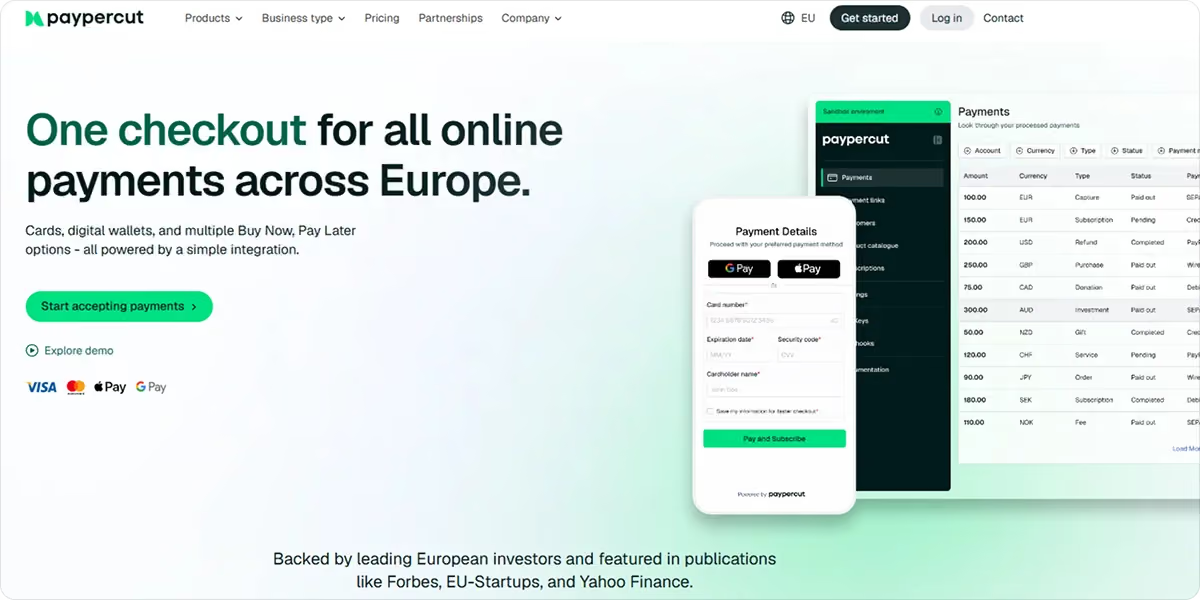
Paypercut is a European payment platform headquartered in Bulgaria that helps businesses accept online payments across CEE and beyond.
Through one setup, merchants can accept cards, digital wallets, QR payments, and Buy Now, Pay Later (BNPL) options where available. That makes Paypercut a strong fit for growing and established e-commerce businesses expanding across CEE.
While Paypercut is designed to keep payments simple, it can also support merchants with more advanced requirements, including multi-market operations, localized payment experiences, and tailored payment setups. As businesses grow, the platform can evolve with them without requiring a complete payment infrastructure rebuild.
Standout features
Paypercut aims to give merchants everything they need to run online payments smoothly from a single platform, helping businesses keep their payment setup simple as they grow.
The platform’s standout features include:
- BNPL aggregator: Offer several BNPL providers at once and give customers flexible installment options that can increase average order value.
- Multiple checkout options: Launch a secure hosted checkout page for quick setup or embed a mobile-optimized payment form directly into your store to keep customers on your site and improve checkout completion.
- E-commerce plugins: Connect Paypercut to platforms like Shopify, WooCommerce, OpenCart, Magento, and PrestaShop with ready-to-install plugins.
- Recurring payments: Automate subscription billing and charge returning customers using securely stored cards or wallets.
- Split payments: Automatically distribute funds between vendors or partners, which is useful for marketplaces and multi-seller platforms.
- Payment links and QR codes: Generate secure payment links or scannable QR codes to collect payments through invoices, email, chat, or in-store displays.
- Multi-currency payments: Accept and settle payments in multiple currencies such as euro (EUR), Romanian leu (RON), Czech koruna (CZK), Hungarian forint (HUF), Polish złoty (PLN), and British pound (GBP) to support cross-border sales.
- Merchant dashboard: Monitor payments, payouts, and performance in real time from one dashboard for better visibility and control.
Benefits
The breadth of Paypercut’s features and its strong focus on localization aren’t the only advantages of using the platform. Merchants will also benefit from:
- Strong payment security: Process transactions through infrastructure that follows strict European regulations and banking-level security standards, including PCI-DSS certification, encryption, and Strong Customer Authentication (SCA) to help reduce fraud.
- Compliance handled automatically: Sell across European markets without worrying about local payment rules, authentication requirements, or regulatory standards.
- Predictable pricing: Avoid complex pricing models and keep payment costs easy to understand as your store grows.
- Flexible payment setup: Enable or adjust payment features as your business evolves without switching providers or rebuilding your checkout.
- Human customer support: Get help from real payment specialists who understand online payments, onboarding, and cross-border growth.
Pricing
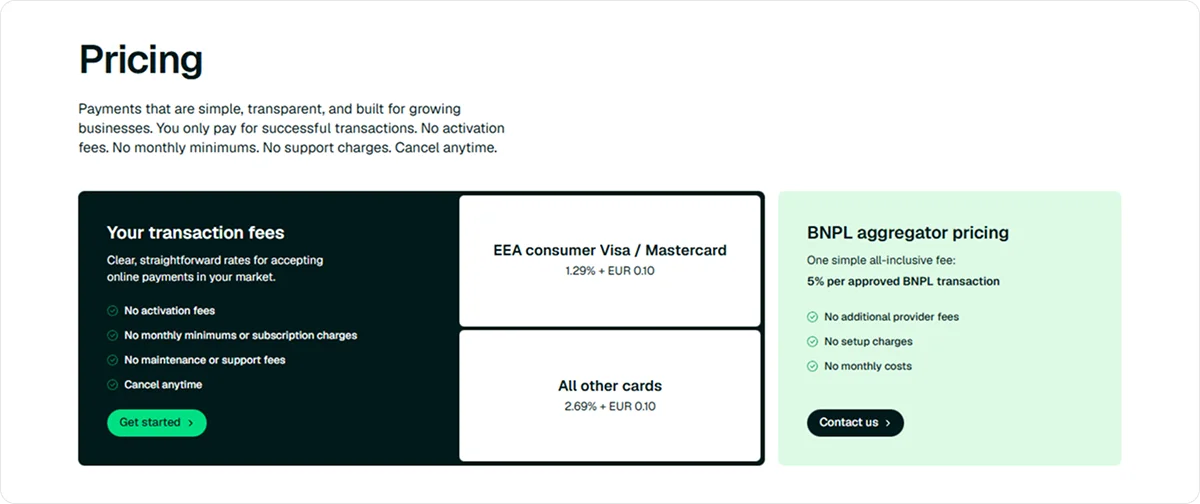
Paypercut follows a simple pay-per-transaction pricing model, so merchants only pay when they process payments.
There are no setup fees, monthly subscriptions, or long-term contracts, and pricing can adjust based on factors like transaction volume, country, and payment type.
2. PayU: Best for large e-commerce businesses with high transaction volumes
PayU is a global payment service provider headquartered in the Netherlands, with major operational hubs in Poland and across CEE.
Its infrastructure is built to support large transaction volumes and complex payment flows, which makes it a reliable choice for high-traffic online stores and marketplaces processing thousands of payments every day.
Features
PayU focuses on helping online merchants run large-scale payment operations smoothly, offering tools like:
- Multiple payment methods: Accept cards, digital wallets, bank transfers, BNPL, links, and local options such as the Polish BLIK to match customer preferences in different markets.
- E-commerce integrations: Connect PayU quickly with popular e-commerce platforms and custom stores to start processing payments without lengthy development work.
- Payment management tools: Monitor transactions, settlements, and payment performance from a centralized dashboard for better operational control.
Pricing
PayU doesn’t publicly disclose its standard pricing for Europe.
According to third-party sources, merchants often appreciate the transparent structure with no hidden charges, although the overall value is rated lower, averaging around 3.8/5.
3. GoPay: Best for small to mid-size online merchants selling in the Czech and Slovak markets
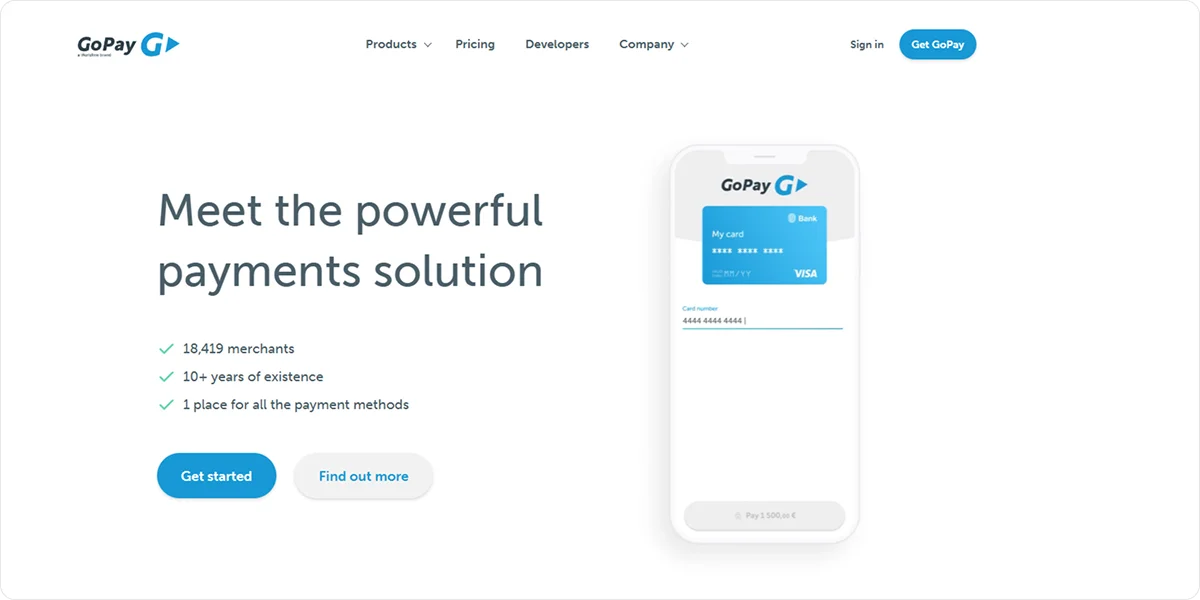
GoPay is a payment gateway headquartered in the Czech Republic, serving online businesses mainly across its country of origin, Slovakia, and other Central European markets.
For smaller online stores in these markets, GoPay offers a practical solution thanks to its local payment integrations and simple setup with popular e-commerce platforms, which helps merchants start accepting payments quickly without complex development work.
Features
GoPay offers several standout features for merchants in the Czech and Slovak markets:
- Multiple payment methods: Accept credit and debit cards, bank transfers, and mobile wallets to give customers familiar ways to pay during checkout.
- E-commerce platform plugins: Connect GoPay to stores running on WooCommerce, Magento, Shoptet or PrestaShop to start processing payments without custom development.
- Worldline backing: Enjoy the the security and stability of one of the world’s largest payment processors even in local markets.
Pricing
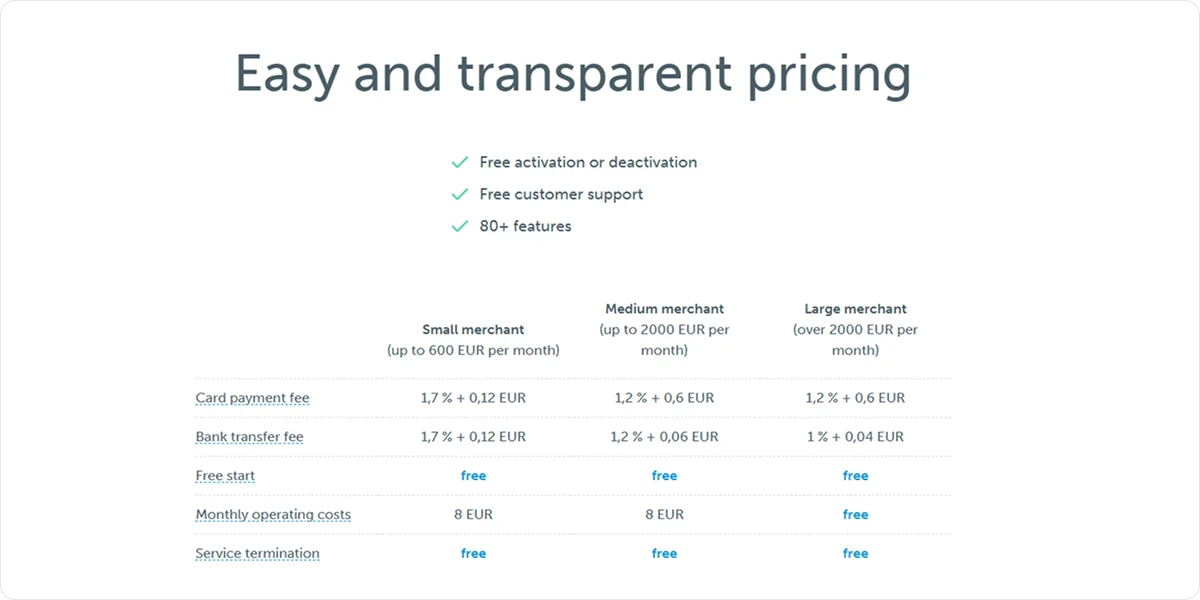
GoPay follows a tiered pricing structure based on merchant transaction volume, with different rates for small, medium, and larger merchants.
The platform keeps onboarding simple with free activation and customer support, while transaction fees vary depending on payment type and monthly sales volume.
4. Tpay: Best for Polish e-commerce merchants prioritizing fast local bank transfer payments
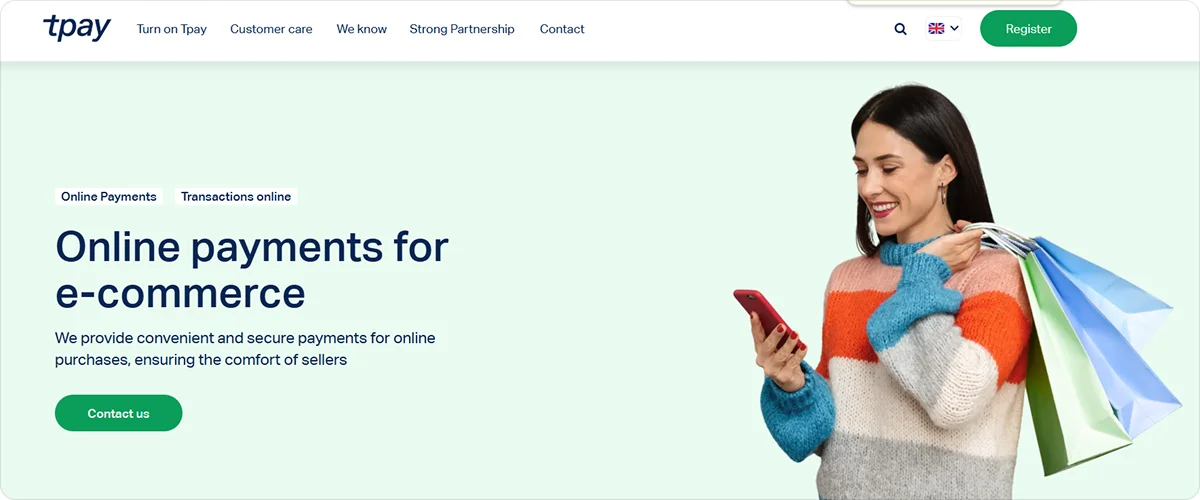
Tpay is a payment service provider headquartered in Poland, primarily serving online merchants in the Polish e-commerce market with locally tailored payment solutions.
Many Polish online stores rely on Tpay because of its strong integration with local banking systems and instant transfer methods, helping merchants process payments quickly and match how customers in Poland prefer to pay online.
Features
Tpay offers payment tools designed to fit the Polish e-commerce ecosystem, including:
- Multiple payment methods: Accept card payments alongside popular Polish options like BLIK and fast online bank transfers, as well as mobile wallets such as Apple Pay and Google Pay.
- E-commerce platform plugins: Connect Tpay to stores built on Shopify, Shoper, Shopware, or Sylius to start processing payments with minimal setup.
- Recurring and installment payments: Offer subscription billing or deferred payment options to give customers more flexibility at checkout.
Pricing
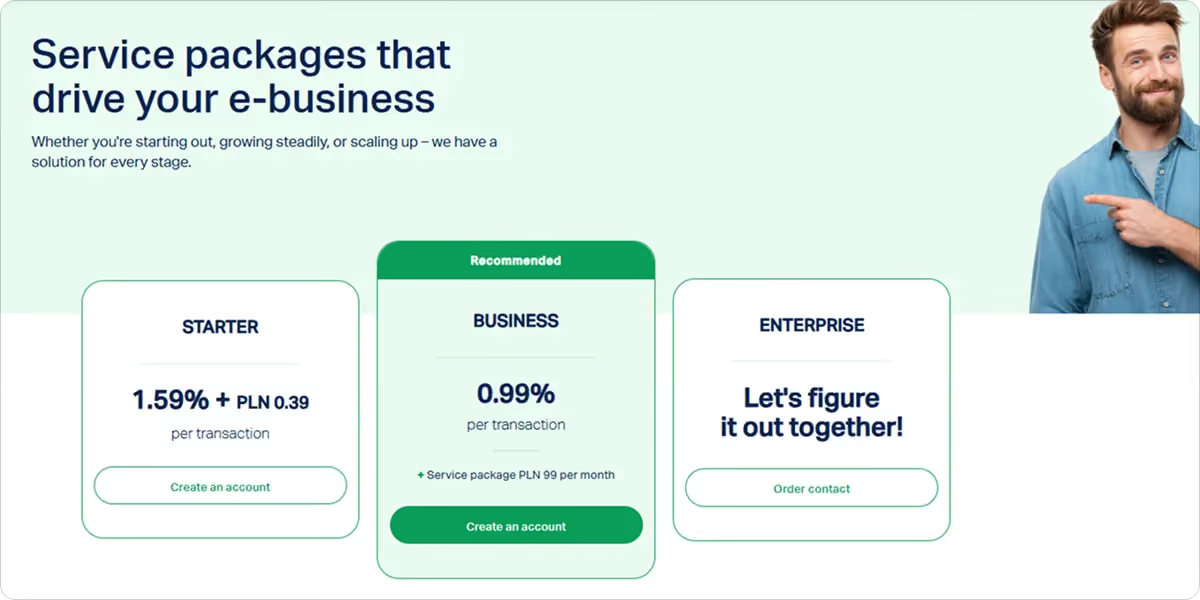
Tpay offers tiered pricing packages for merchants, with plans depending on business size and transaction volume.
Fees vary by payment type and package, while larger merchants can negotiate custom pricing based on their payment volumes.
5. Finby: Best for digital businesses prioritizing instant bank transfer payments
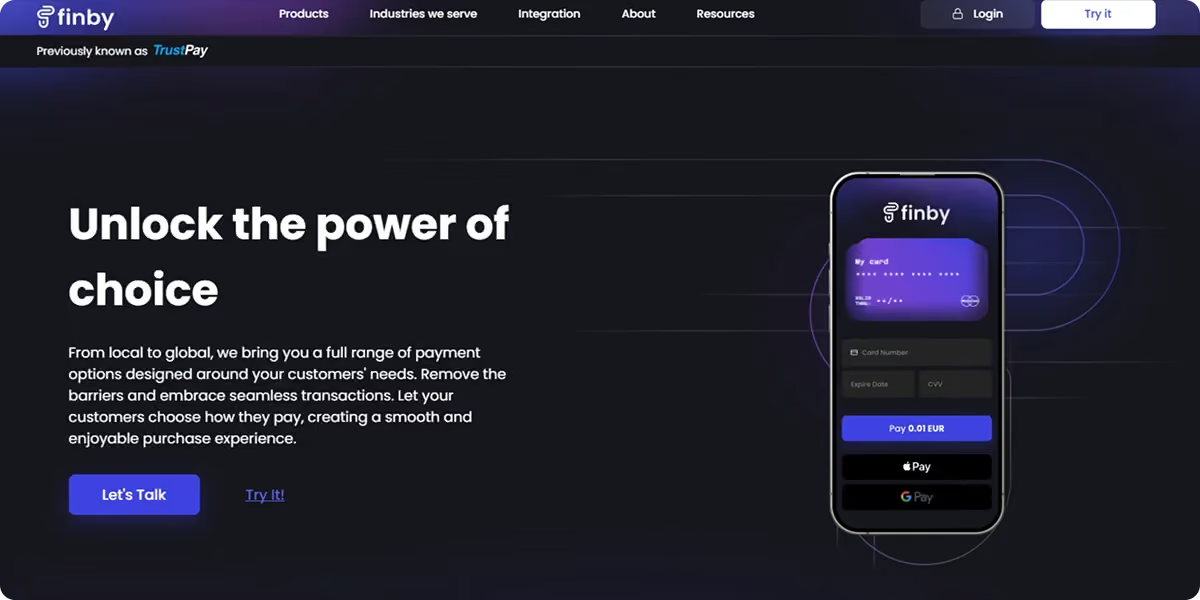
Finby (formerly TrustPay) is a payment platform headquartered in Slovakia, providing payment services for online merchants across CEE and the wider European market.
Digital businesses often turn to Finby when speed matters, as its strong support for instant bank transfers and open banking payments allows merchants to confirm transactions quickly and deliver digital products or services without waiting for slower payment processing.
Features
Finby’s payment tools are designed for fast digital transactions and cross-border online sales, and they include:
- Multiple payment methods: Accept card payments alongside instant bank transfers and alternative payment methods to match how customers prefer to pay online.
- Open banking payments: Enable PSD2-compliant bank payments that connect directly to customers’ bank accounts for faster payment confirmation.
- Multi-currency payments: Process transactions in multiple currencies to support cross-border e-commerce and digital sales across Europe.
Pricing
Finby doesn’t list specific pricing for its payment services, which typically operate on a custom quote basis for merchants.
Businesses need to contact the company directly to receive tailored pricing based on factors such as payment volume, markets served, and services like card processing or subscriptions.
6. Paysera: Best for small businesses and marketplaces managing multi-currency payments

Paysera is a payment platform headquartered in Lithuania, serving merchants across the Baltics, Poland, Bulgaria, Romania, and other CEE markets.
Paysera is well-suited for small businesses selling across borders thanks to its multi-currency infrastructure and IBAN-based accounts, which help merchants accept payments and manage funds without complex banking setups.
Features
Paysera is all about cross-border sales, offering tools like:
- Multiple payment methods: Accept card payments alongside local bank transfers and SEPA payments to give customers familiar checkout options across different European markets.
- Local IBANs: Receive a “local-looking” account number in different countries to increase trust.
- E-commerce integrations: Connect Paysera with major online store platforms to start accepting payments without building a custom payment infrastructure.
Pricing
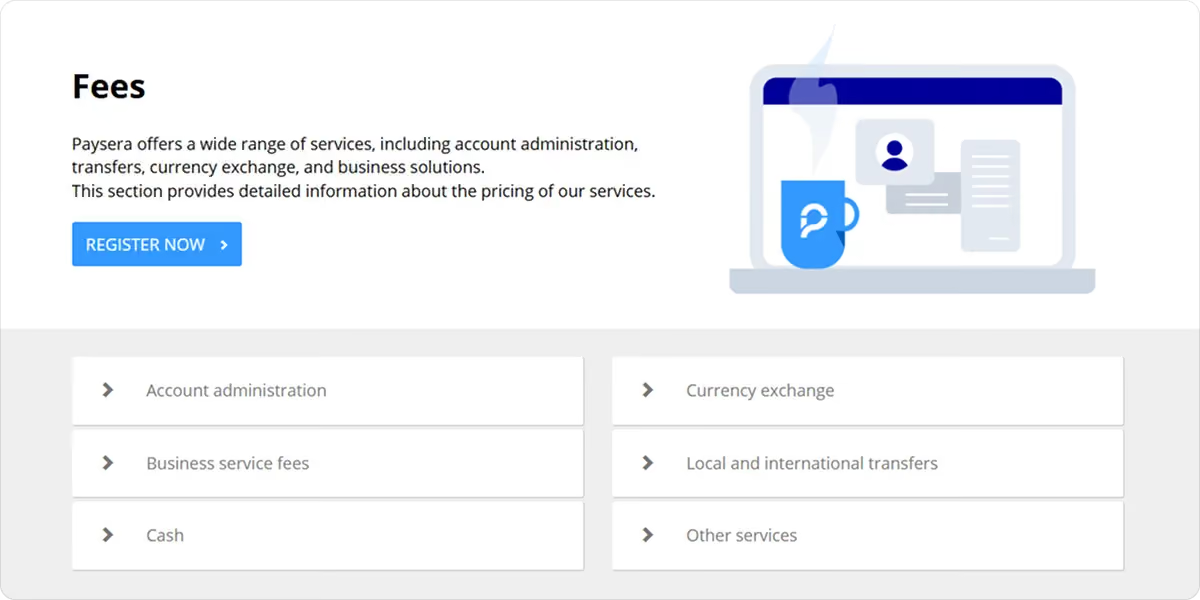
Paysera offers tiered transaction pricing based on monthly payment volume, with lower fees available as transaction numbers increase.
The platform also provides detailed pricing for different services such as transfers, currency exchange, and payment processing, allowing merchants to review costs depending on how they plan to use the system.
7. Comgate: Best for e-commerce startups looking for a simple payment integration
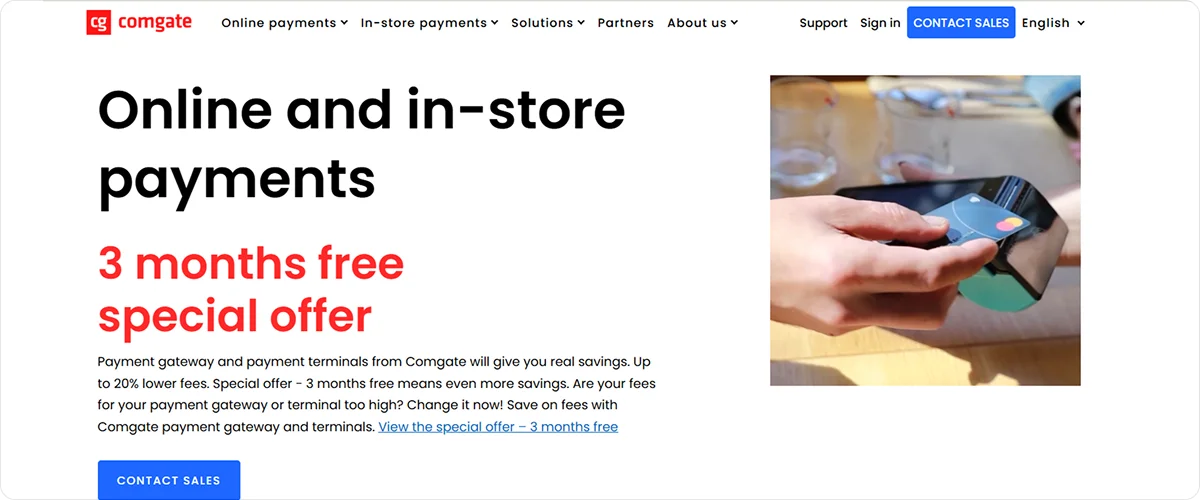
Comgate is a payment service provider based in the Czech Republic, serving online merchants mainly across its country of origin, Slovakia, and Central Europe.
For new online stores, Comgate lowers the barrier to accepting payments thanks to its quick setup, transparent pricing, and wide compatibility with e-commerce platforms, allowing startups to launch checkout functionality without complicated integrations.
Features
Comgate focuses on making online payments easy to set up and manage for smaller merchants, with practical tools that include:
- Multiple payment methods: Accept card payments along with bank transfers, QR payments, and digital wallets such as Apple Pay and Google Pay, giving customers flexible checkout options.
- e-commerce platform integrations: Connect Comgate to over 100 e-commerce platforms or custom stores to start processing payments with minimal technical setup.
- Payment recovery and recurring payments: Reduce failed checkouts and support repeat purchases by enabling recurring billing and payment restart options.
Pricing
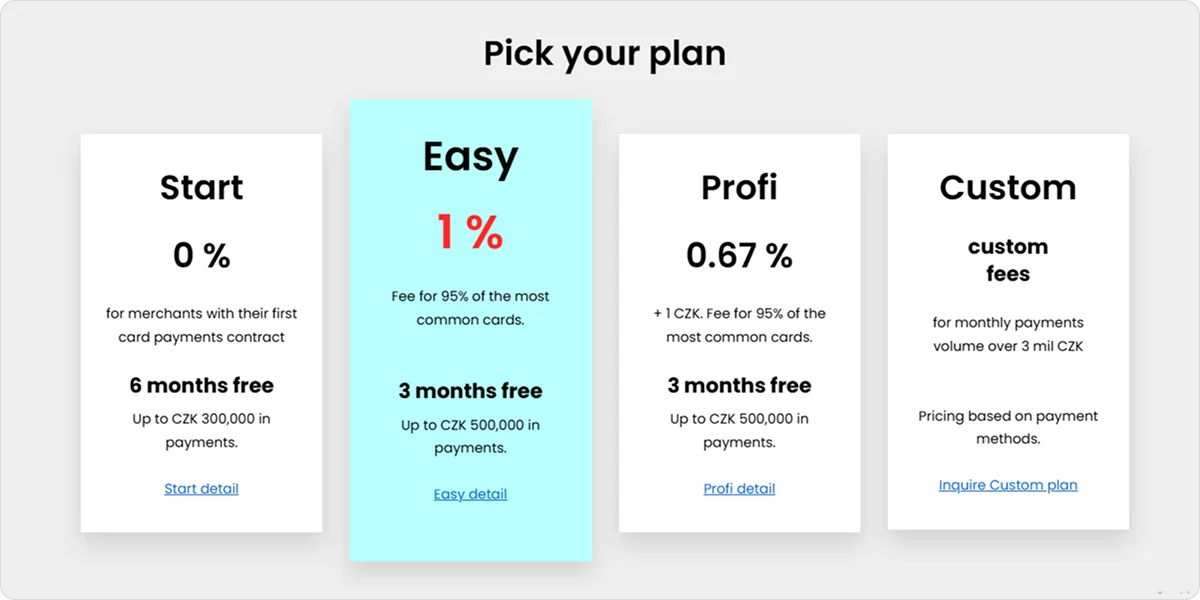
Comgate publishes fully transparent pricing online, with several plans designed for merchants at different growth stages.
New businesses can start with promotional plans that waive fees for smaller volumes, while larger merchants can choose lower transaction rates or negotiate custom pricing.
How to choose the best software for handling payments in e-commerce
For any online store, the payment setup is one of the most important parts of the entire shopping experience.
If payments are slow, complicated, or don’t support the methods customers prefer, shoppers may abandon their carts before completing a purchase.
On the other hand, a smooth and reliable checkout can improve trust, increase conversions, and make it easier for businesses to scale into new markets.
That’s why it’s important to choose your payment software carefully. Paying attention to the following factors can help you do just that:
- Market availability: Make sure the payment provider actually operates in the countries where you want to sell, since licensing, banking partnerships, and settlement capabilities can vary across CEE markets.
- Strong localization: Offer customers a checkout that feels familiar by supporting local currencies, preferred payment methods, and language options where possible.
- Supported payment methods: Make sure the platform offers the payment options your customers expect, such as cards, bank transfers, digital wallets, or BNPL services.
- e-commerce integrations: Check whether the payment provider connects easily with your e-commerce platform or website to avoid a complex technical setup.
- Scalability: Select a solution that can grow with your business, allowing you to expand into new markets or handle higher transaction volumes without switching providers.
- Pricing transparency: Understand the full pricing structure, including transaction fees and potential extra costs such as refunds, chargebacks, or currency conversion, before committing to a platform.
- Security and compliance: Ensure the platform follows industry standards like PCI-DSS and SCA to protect transactions and customer data.
Getting started with Paypercut
When it comes to choosing the best software for handling payments in e-commerce, Paypercut brings together many of the capabilities merchants typically look for: reliable payment processing, local payment methods, strong security, and integrations with common e-commerce platforms.
But what really sets this software apart goes beyond the basics.
For merchants operating in CEE, Paypercut stands out thanks to its BNPL aggregator, which connects multiple Buy Now, Pay Later providers through a single integration. Instead of building and maintaining separate connections for each provider, merchants can offer several installment options directly from one setup, giving customers more flexibility while improving checkout completion.
The platform also focuses on keeping payments simple for merchants.
With fully digital onboarding, no setup fees or long-term contracts, and pay-per-transaction pricing, businesses can get started quickly without committing to complicated payment infrastructure. Payments settle directly to your existing bank account, and the dashboard gives you full visibility over transactions, payouts, and performance.
And when you need help, you’re supported by real people who understand payments and e-commerce, not automated chatbots.
Schedule a short consultation with the said (human) team to see how Paypercut could support your e-commerce business and explore the best setup for your store. Alternatively, you can create your account online in just a few minutes, complete the quick digital verification, and start setting up payments for your store right away.