
Klienci nie rezygnują z zakupów nie dlatego, że produkt jest kiepski. Rezygnują, bo nie mogą zapłacić w wybrany przez siebie sposób.
Karty płatnicze nadal stanowią podstawę, ale już nie wystarczają. Portfele elektroniczne, opcje „kup teraz, zapłać później”, natychmiastowe przelewy bankowe oraz lokalne metody płatności w coraz większym stopniu decydują o tym, czy transakcja zostanie sfinalizowana, czy też zrezygnowano z niej.
Na całym świecie ponad 70% koszyków zostaje porzuconych, a znaczna część tych rezygnacji wynika z braku lub nieznajomości dostęp nych metod płatności.
Wybór odpowiednich metod płatności nie jest już kwestią techniczną. To kwestia konwersji.
W niniejszym przewodniku omówiono najważniejsze obecnie metody płatności stosowane w handlu elektronicznym, ich zalety i wady oraz wskazówki, jak wybrać te, które najlepiej sprawdzą się w Twojej firmie.
Najważniejsze wnioski
- Karty płatnicze pozostają najpopularniejszą metodą płatności w handlu elektronicznym.
Europejscy klienci sklepów internetowych nadal najczęściej płacą kartami. Na drugim miejscu plasują się portfele elektroniczne, które zyskują coraz większą popularność. Nowoczesne rozwiązania, takie jak płatności natychmiastowe, BNPL i kryptowaluty, pozostają dla większości sprzedawców rozwiązaniem niszowym, mimo że zyskują na popularności.
- Każda metoda płatności wiąże się z pewnymi zaletami i wadami.
Karty kredytowe są uniwersalne, ale wiążą się z opłatami transakcyjnymi i ryzykiem obciążenia zwrotnego. Rozwiązania typu „kup teraz, zapłać później” (BNPL) sprzyjają większym zamówieniom, ale są droższe i nie sprawdzają się w przypadku produktów o niskiej marży. Świadomość, kiedy dana metoda nie jest odpowiednia, jest równie ważna, jak wiedza o tym, kiedy się sprawdza.
- Preferencje dotyczące metod płatności różnią się w zależności od grupy demograficznej.
To, co sprawdza się w przypadku firmy zajmującej się dropshippingiem w Bułgarii, niekoniecznie musi sprawdzić się w przypadku małej greckiej firmy. Ponadto, choć większość klientów preferuje płatności kartą, młodsi klienci chętniej korzystają z rozwiązań cyfrowych. Przed podjęciem jakichkolwiek decyzji dotyczących organizacji działalności warto dokładnie zbadać swoją bazę klientów.
- Dzięki Paypercut obsługa różnych metod płatności jest prosta.
Zarządzanie wieloma metodami płatności nie musi wiązać się z koniecznością korzystania z wielu dostawców, paneli administracyjnych i umów. Paypercut łączy wszystkie metody w jedną integrację, umożliwiając rozszerzanie działalności na różne rynki bez konieczności przebudowywania procesu realizacji transakcji.
Najpopularniejsze metody płatności w handlu elektronicznym
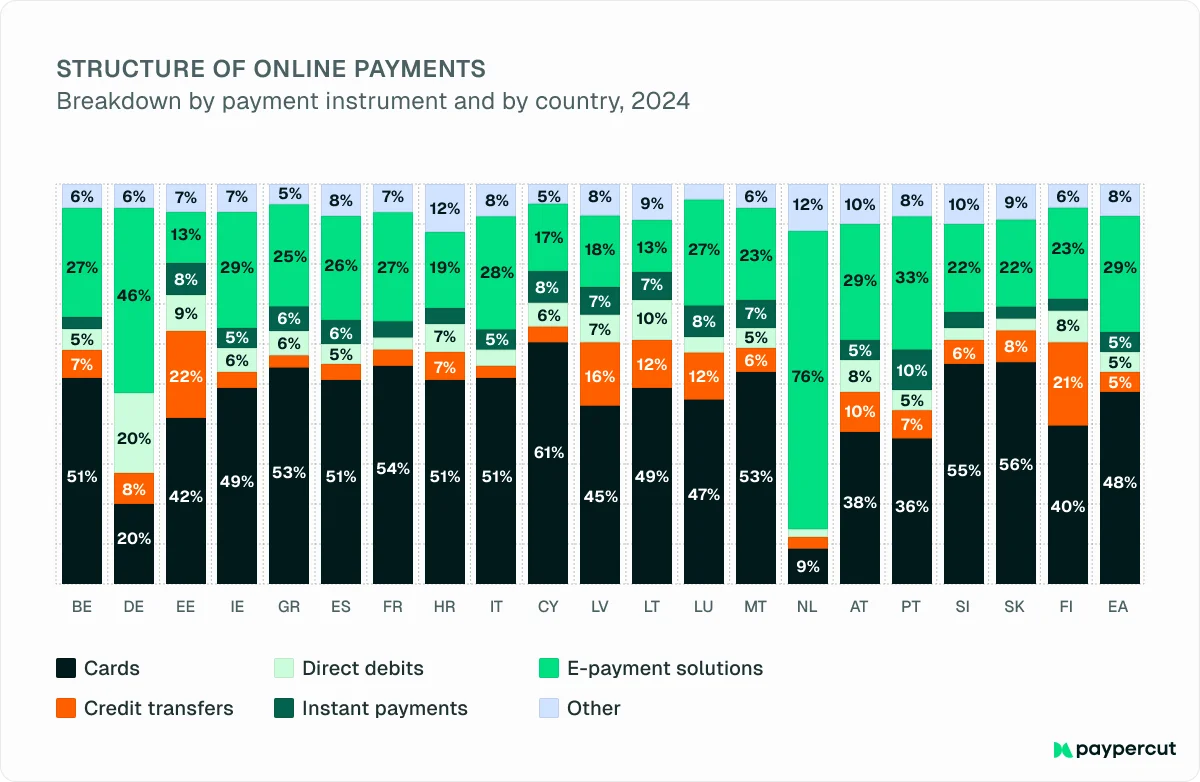
Oto lista metod płatności internetowych powszechnie stosowanych w 2024 roku, sporządzona na podstawie raportu Europejskiego Banku Centralnego:
Struktura płatności internetowych jest podobna we wszystkich 18 analizowanych krajach, z wyjątkiem Niemiec i Holandii, gdzie rozwiązania cyfrowe wyprzedziły karty.
6 najpopularniejszych metod płatności w handlu elektronicznym i kiedy warto je oferować
Oto przegląd 6 najlepszych metod płatności w handlu elektronicznym wraz z ich najważniejszymi cechami:
Oto krótki przewodnik pomagający w podjęciu decyzji:
- Zacznij od kart i portfeli → to wystarczy większości użytkowników
- Dodaj metody lokalne → w przypadku wejścia na konkretny rynek (np. BLIK w Polsce)
- Dodaj opcję „Kup teraz, zapłać później” → jeśli średnia wartość zamówienia wynosi co najmniej 50 euro
- Dodaj opcję przelewu bankowego/karty debetowej → jeśli obsługujesz subskrypcje lub zamówienia o wysokiej wartości
- Dodaj opcję płatności przy odbiorze → tylko na rynkach o niskim poziomie zaufania
1. Karty debetowe i kredytowe
Płatności kartą pozostają najpopularniejszą metodą dokonywania zakupów internetowych w całej Europie. Większość konsumentów posiada już karty i wie, jak z nich korzystać. Większość sprzedawców akceptuje już takie płatności. Ponadto sieci kartowe, takie jak Visa i Mastercard, chronią zarówno Ciebie, jak i konsumentów przed oszustwami.
Gdy klient wprowadza dane karty podczas finalizacji transakcji, Twój operator płatności przesyła te informacje do sieci kartowej w celu autoryzacji. Środki są przekazywane z banku klienta do Twojego, a rozliczenie następuje zazwyczaj w ciągu kilku dni roboczych.
Z drugiej strony opłaty transakcyjne zmniejszają marże, zwłaszcza w przypadku produktów o niższej wartości. Oprócz standardowych stawek za transakcje kartą należy uwzględnić wyższe opłaty związane z transakcjami transgranicznymi i kartami firmowymi. Obciążenia zwrotne mogą generować dodatkowe koszty. Niektórzy klienci nadużywają procedury reklamacyjnej, a nawet w przypadku uzasadnionych obciążeń zwrotnych ich zakwestionowanie wymaga czasu.
Kiedy wręczać kartki
- Zawsze. Jeśli nie akceptujesz niczego innego, akceptuj przynajmniej karty.
- Prowadzisz sprzedaż międzynarodową, a dostępność lokalnych metod jest niepewna.
Gdy inne metody są nadal konieczne
- Gdy średnia wartość zamówienia jest niska (poniżej 15–20 euro), opłaty manipulacyjne pochłaniają nieproporcjonalnie dużą część przychodów. Zaproponowanie alternatywnych metod płatności może przynieść znaczne łączne oszczędności.
- Wśród klientów korzystających z urządzeń mobilnych odsetek porzuconych koszyków może być wysoki, a inne rozwiązania, takie jak portfele cyfrowe, mogą przynosić lepsze wyniki w zakresie konwersji.
2. Portfele cyfrowe
Portfele cyfrowe przechowują dane rozliczeniowe na smartfonach i uwierzytelniają transakcje za pomocą danych biometrycznych lub kodów PIN. Podczas gdy karty mogą wymagać od konsumentów wprowadzania 16-cyfrowych numerów kart i kodów CVV, portfele umożliwiają dokonywanie płatności jednym dotknięciem.
Portfele są również bezpieczniejsze, ponieważ podczas transakcji rzeczywiste numery kart są zastępowane tokenami, co ogranicza liczbę oszustw i niepowodzeń w procesie autoryzacji.
Obecnie z portfeli elektronicznych częściej korzystają młodsi klienci, ale wskaźniki te rosną we wszystkich grupach wiekowych. Przewiduje się, że do 2033 r. wartość europejskiego rynku portfeli mobilnych osiągnie 31 mld dolarów, rosnąc w tempie 27% rocznie.
Usługi Apple Pay i Google Pay są dostępne na większości rynków europejskich, natomiast w poszczególnych regionach dominują lokalne rozwiązania, takie jak BLIK w Polsce czy Viva Wallet w Grecji.
Te różnice geograficzne mogą stanowić wyzwanie. Obsługa wszystkich dostępnych opcji jest często uciążliwa i kosztowna, ponieważ każdy portfel wymaga osobnej integracji, umowy oraz procesu uzgadniania sald na koniec miesiąca. Zanim zaczniesz oferować portfele, zapoznaj się z lokalnym rynkiem i wybierz opcję w oparciu o jej popularność w danym regionie.
Kiedy warto proponować portfele cyfrowe
- Twoja grupa klientów składa się głównie z osób młodszych lub korzystających przede wszystkim z urządzeń mobilnych. Płatności za pomocą portfela znacznie ułatwiają proces zakupów na smartfonach.
- Sprzedajesz na rynkach, na których dominuje lokalny system płatności (na przykład BLIK w Polsce). Brak obsługi tego systemu oznacza utratę sprzedaży na rzecz konkurencji, która go obsługuje.
Kiedy portfele nie są warte swojej ceny
- Twoi klienci robią zakupy głównie na komputerach stacjonarnych i zapisują dane kart kredytowych.
- Na Twoim rynku docelowym portfele cyfrowe nie są jeszcze zbyt rozpowszechnione.
3. Przelew bankowy
Przelewy bankowe umożliwiają bezpośredni transfer środków między rachunkami, całkowicie pomijając sieci kart płatniczych. Są one jedną z najstarszych metod płatności, a konsumenci w całej Europie nadal chętnie z nich korzystają przy zakupach internetowych, zwłaszcza w przypadku zamówień o wyższej wartości.
W handlu elektronicznym szczególnie powszechne są dwie odmiany:
- Płatności natychmiastowe: Przelewy natychmiastowe realizują transakcje w ciągu kilku sekund, dzięki czemu proces realizacji transakcji przypomina płatności kartą. Popularność tej formy płatności szybko rośnie. Ponad 62% konsumentów w strefie euro zadeklarowało w 2024 r., że ma dostęp do płatności natychmiastowych, a 45% z nich już z nich skorzystało.
- Pobranie: Klienci upoważniają Cię do automatycznego pobierania środków z ich konta zgodnie z ustalonym harmonogramem. Ta metoda doskonale sprawdza się w przypadku subskrypcji i cyklicznych rozliczeń. Pozwala obniżyć koszty w porównaniu z płatnościami kartą oraz zapewnia bardziej przewidywalny przepływ środków przy mniejszym nakładzie pracy związanej z ręcznym monitorowaniem.
Płatności natychmiastowe wiążą się z opłatami manipulacyjnymi porównywalnymi do tych pobieranych w przypadku kart. Polecenie zapłaty, choć tańsze w przeliczeniu na pojedynczą transakcję, charakteryzuje się dłuższym czasem rozliczenia i większym ryzykiem obciążenia zwrotnego.
SEPA ujednoliciła system poleceń zapłaty w całej Europie, jednak w zależności od dostawcy usług płatniczych ich konfiguracja i obsługa mogą nadal wymagać znacznych nakładów. Konieczne będzie gromadzenie, przechowywanie i aktualizowanie upoważnień klientów, a także reagowanie na nieudane pobrania w przypadku braku środków na koncie lub zamknięcia konta.
Małe zespoły często zauważają, że te obciążenia administracyjne pochłaniają oszczędności, które sprawiły, że polecenie zapłaty stało się w ogóle atrakcyjne.
Kiedy warto proponować przelewy bankowe
- Oferujesz subskrypcje lub cykliczne rozliczenia.
- Zamówienia mają zazwyczaj wysoką wartość.
- Twoje rynki docelowe dysponują dobrze rozwiniętą infrastrukturą płatniczą, dlatego klienci oczekują takiej możliwości.
Kiedy warto zrezygnować z przelewów bankowych lub obniżyć ich priorytet
- Zamówienia mają zazwyczaj charakter jednorazowy i dotyczą niewielkich kwot. Nakłady związane z przygotowaniem nie są uzasadnione.
- Twój dostawca nie zajmuje się uzgadnianiem danych dotyczących zarządzania zleceniami, a Ty nie dysponujesz wewnętrznymi zasobami, aby się tym zająć.
- Na rynku docelowym wskaźniki upowszechnienia są niskie. Na przykład inwestycja ta może nie być opłacalna na Słowacji czy w Słowenii.
4. Kup teraz, zapłać później (BNPL)
BNPL pozwala klientom rozłożyć płatność za zakup na mniejsze raty. Większość dostawców wypłaca Ci pełną kwotę z góry, w którym to przypadku to oni przejmują ryzyko kredytowe i pobierają płatności od klienta w miarę upływu czasu.
Sprzedawcy oferujący opcję „kup teraz, zapłać później” odnotowują o około 30% wyższy współczynnik konwersji oraz o około 20–40% wyższą średnią wartość koszyka. Klienci chętniej finalizują zakupy i dodają więcej produktów do koszyka, gdy koszt jest rozłożony na kilka rat.
Ten model sprzedaży jest atrakcyjny dla młodszych klientów, którzy zazwyczaj nie mają dostępu do kredytu. Sprawdzają się również w przypadku produktów z wyższej półki cenowej.
W Europie popularność usług typu „kup teraz, zapłać później” rośnie od 2022 roku w tempie 25,5% rocznie, co wynika z nowych regulacji oraz coraz większej liczby banków wchodzących na ten rynek. Ponieważ preferencje różnią się w zależności od regionu, zaleca się oferowanie wielu opcji, co jednak zwiększa złożoność procesu.
Jeśli chodzi o koszty, opłaty za usługę BNPL wynoszą od 2% do 8%, czyli są wyższe niż standardowe opłaty za obsługę kart płatniczych. Zatwierdzenie wniosku klienta zależy również od weryfikacji zdolności kredytowej w czasie rzeczywistym, więc nie każdy kupujący spełni wymagania. Odrzucenie wniosku o BNPL w trakcie realizacji transakcji często skutkuje całkowitą utratą sprzedaży, ponieważ klienci rzadko decydują się na inną metodę płatności po otrzymaniu odmowy.
Kiedy warto zaproponować opcję „kup teraz, zapłać później”
- Sprzedajesz produkty z wyższej półki (50–100 euro).
- Twoja grupa docelowa to pokolenie millenialsów lub pokolenie Z.
- Sprzedajesz sprzęt elektroniczny, meble lub artykuły spożywcze – czyli produkty z kategorii, w których najczęściej korzysta się z opcji „kup teraz, zapłać później”.
Kiedy nie należy stosować modelu „kup teraz, zapłać później”
- Wasze marże wynoszą poniżej 15%, a opłaty w wysokości 4–8% pochłaniają większość zysku
- Wartość zamówień jest zazwyczaj niska, więc większość klientów nie potrzebuje opcji „kup teraz, zapłać później”. Wzrost konwersji jest zbyt niewielki, by uzasadnić ponoszenie opłat.
- Sprzedajesz głównie produkty z kategorii charakteryzujących się wysokim odsetkiem zwrotów, takich jak odzież. Usługi typu „kup teraz, zapłać później” (BNPL) zazwyczaj sprzyjają zakupom pod wpływem impulsu, a klienci częściej zwracają takie produkty. W przypadku zwrotu kosztów dostawcy usług BNPL zazwyczaj zatrzymują opłatę transakcyjną, którą pobierają od sprzedawców.
Wskazówka: Paypercut umożliwia oferowanie usług wielu lokalnych dostawców usług BNPL za pośrednictwem jednej integracji. Działa również jako dostawca, gdy inne opcje są niedostępne. Możesz otrzymać płatność z góry lub skorzystać z bardziej opłacalnej opcji finansowanej przez sprzedawcę.
5. Płatność przy odbiorze
Płatność przy odbiorze (COD) całkowicie eliminuje problem zaufania, ponieważ kupujący nie muszą podawać swoich danych finansowych w Internecie i płacą dopiero po obejrzeniu produktu.
W całej Europie konsumenci nadal bardzo chętnie korzystają z gotówki. 62% konsumentów w strefie euro uważa, że możliwość płacenia gotówką jest ważna lub bardzo ważna, podając jako powody między innymi ochronę prywatności i lepszą kontrolę nad wydatkami. Na rynkach, gdzie zaufanie do płatności internetowych wciąż się rozwija, takich jak Grecja, płatność przy odbiorze może decydować o tym, czy zamówienie zostanie zrealizowane, czy też koszyk zostanie porzucony.
Chociaż płatności gotówkowe nie wiążą się z opłatami transakcyjnymi, to jednak generują koszty operacyjne. Płatność przy odbiorze zwiększa ryzyko odmowy przyjęcia przesyłki, co oznacza koszty wysyłki zwrotnej i zamrożone zapasy. Obsługa gotówki komplikuje logistykę dla kurierów i opóźnia przepływ środków, ponieważ środki trafiają do firmy dopiero po pomyślnym doręczeniu przesyłki.

Kiedy warto zaproponować płatność przy odbiorze
- Wkraczasz na rynek, na którym zaufanie do płatności internetowych wciąż się buduje.
- Sprzedajesz produkty fizyczne i chcesz zmniejszyć liczbę porzuconych koszyków wśród nowych klientów, którzy nie znają jeszcze Twojej marki.
- Sprzedajesz głównie produkty, które rzadko są zwracane, takie jak artykuły konsumpcyjne, więc klienci raczej nie odmówią odbioru przesyłki.
Kiedy płatność przy odbiorze nie jest najlepszym rozwiązaniem
- Prowadzisz działalność na wielu rynkach i zarządzasz logistyką płatności przy odbiorze na każdym z nich.
- Wskaźnik odmówionych odbiorów przekracza 10–15%. W takiej sytuacji koszty operacyjne związane ze zwrotami, ponowną wysyłką i zamrożonymi zapasami prawdopodobnie przewyższają przychody generowane przez płatności za pobraniem.
- Potrzebujesz szybkiego napływu gotówki. Opóźnienia w rozliczeniach mogą nadwyrężyć kapitał obrotowy małej firmy.
- Sprzedajesz towary o dużej wartości, więc ryzyko odmowy odbioru jest wysokie.
6. Kryptowaluty
Płatności kryptowalutowe umożliwiają klientom dokonywanie płatności za pomocą aktywów cyfrowych, takich jak Bitcoin czy Ethereum. Są one przetwarzane przez bramkę płatniczą, która w momencie finalizacji transakcji przelicza je na walutę fiducjarną, co pozwala uniknąć bezpośredniej ekspozycji na wahania kursów.
Metoda ta przemawia do niewielkiej, ale lojalnej grupy młodszych, zaawansowanych technologicznie klientów, którzy aktywnie poszukują sprzedawców akceptujących kryptowaluty.
Mimo to popularność kryptowalut wśród europejskich konsumentów rośnie. Odsetek posiadaczy kryptowalut w strefie euro wzrósł ponad dwukrotnie w latach 2022–2024 (z 4% do 9%). Większość osób kupuje kryptowaluty w celach inwestycyjnych, ale coraz częściej wykorzystuje się je również do dokonywania płatności. Oczekuje się, że unijne rozporządzenie w sprawie rynków kryptowalut (MiCA) przyspieszy tę zmianę, zapewniając przedsiębiorstwom i konsumentom jaśniejsze zasady.
Dla sprzedawców kryptowaluty oznaczają niższe opłaty transakcyjne niż w przypadku kart, szybsze rozliczenia transgraniczne oraz brak obciążeń zwrotnych.
Należy jednak wziąć pod uwagę wiele praktycznych wyzwań. W przypadku małych firm zajmujących się handlem elektronicznym poziom akceptacji tej metody przez konsumentów jest wciąż zbyt niski, by uzasadnić jej wdrożenie. Wahania cen między momentem zainicjowania transakcji a jej rozliczeniem mogą wpływać na otrzymaną kwotę, a sprawozdawczość podatkowa i księgowość wiążą się z dodatkowymi obciążeniami administracyjnymi, do których małe firmy zazwyczaj nie są przygotowane.
Kiedy kryptowaluty mają sens
- Sprzedajesz produkty cyfrowe lub usługi międzynarodowej grupie odbiorców znającej się na technologii.
- Działasz w branży, w której panuje duży entuzjazm dla kryptowalut, takiej jak gry, sztuka cyfrowa czy sprzęt technologiczny.
- Wasze marże są na tyle wysokie, że pozwalają bez większego trudu pokryć koszty związane z księgowością i zapewnieniem zgodności z przepisami.
Kiedy wstrzymać się z inwestycjami w kryptowaluty
- Twoja baza klientów nie jest jeszcze wystarczająco duża. Złożoność operacyjna nie jest uzasadniona niewielką liczbą transakcji, które musiałbyś przetwarzać.
- Nie masz doświadczenia w zakresie księgowości ani podatków związanych z transakcjami kryptowalutowymi. Popełnienie błędu w tej kwestii może spowodować problemy regulacyjne, których konsekwencje znacznie przewyższą potencjalne zyski.
- Sprzedajesz produkty fizyczne, które często są zwracane. Bez ustandaryzowanej procedury rozstrzygania sporów zwroty w kryptowalutach odbywają się ręcznie i są uciążliwe dla obu stron.
Paypercut: Jeden panel do zarządzania wszystkimi metodami płatności
Preferencje dotyczące płatności różnią się w zależności od regionu. Ponadto każda metoda płatności wiąże się z własnymi dostawcami, procesami integracji i strukturami opłat.
Próba zaspokojenia potrzeb jak największej liczby klientów może szybko przerodzić się w chaos związany z mnóstwem odrębnych umów, rozproszonymi danymi transakcyjnymi i godzinami spędzonymi na przełączaniu się między platformami.
Dzięki Paypercut możesz uniknąć tych problemów bez żadnych kompromisów. Zamiast korzystać z dziesiątek platform, wystarczy jednorazowo zintegrować się z Paypercut, aby uzyskać dostęp do różnych metod płatności, w tym:
- Karty
- Portfele cyfrowe
- Kup teraz, zapłać później
- Kody QR
- Linki do płatności
- Płatności cykliczne
Zarządzanie dostawcami, płatnościami i przychodami jest proste dzięki kompleksowemu panelowi Paypercut, niezależnie od tego, czy prowadzisz małą, czy dużą firmę.
Paypercut jest w pełni dostosowany do potrzeb rynków Europy Środkowej i Wschodniej oraz obsługuje procesy związane z zapewnieniem zgodności z przepisami i weryfikacją tożsamości klientów (KYC), umożliwiając szybkie przeprowadzenie tych procedur online. Po skonfigurowaniu platformy możesz oferować transakcje w ponad 12 walutach, prowadzić sprzedaż na ponad 20 rynkach europejskich oraz skalować działalność w miarę potrzeb.
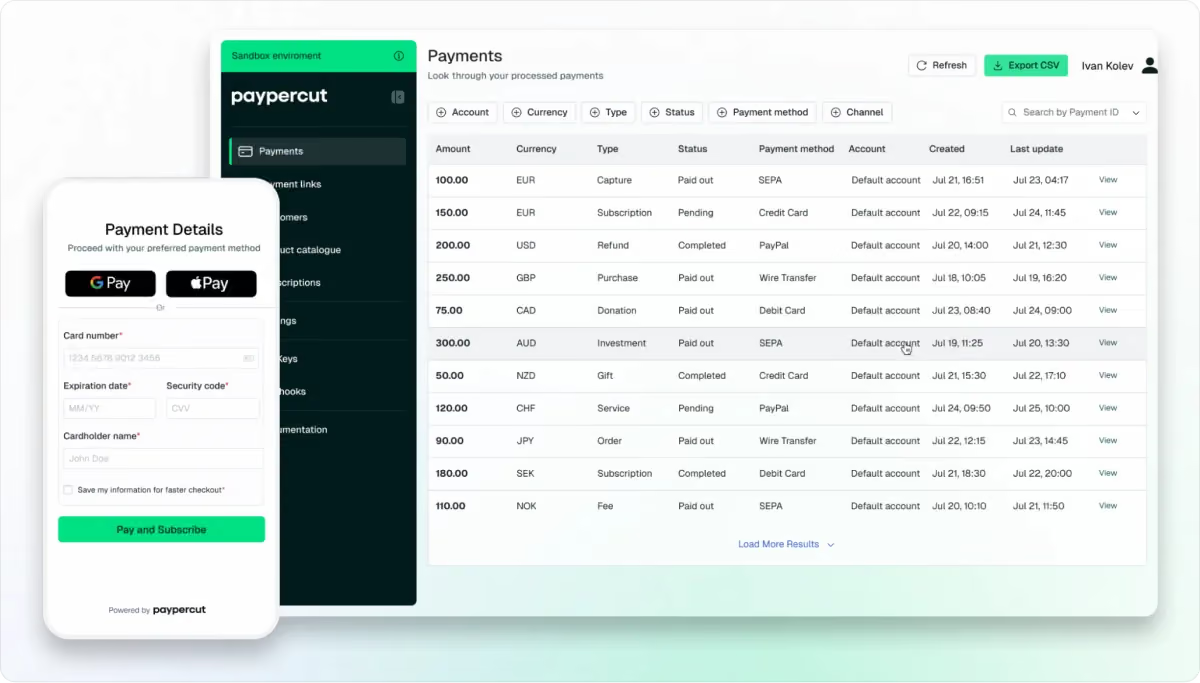
Rozpoczęcie działalności nie wymaga zasobów programistycznych. Wtyczki dla Shopify, WooCommerce i OpenCart umożliwiają szybką konfigurację, a interfejsy API są dostępne dla sklepów tworzonych na zamówienie lub innych platform. Jeśli potrzebujesz pomocy, Paypercut skontaktuje Cię z prawdziwymi ekspertami, którzy pomogą Ci szybko rozpocząć działalność.
Zacznij korzystać z Paypercut, aby zapewnić klientom oczekiwane przez nich metody płatności i wspierać rozwój swojej działalności e-commerce.
Najczęściej zadawane pytania
Jak wybierasz metody płatności dla swojego sklepu internetowego?
Wybór metod płatności należy rozpocząć od określenia, jaki efekt chcesz osiągnąć.
Jeśli Twoim celem jest zwiększenie konwersji, postaw na metody zapewniające płynny proces, takie jak karty płatnicze, portfele cyfrowe i opcje „kup teraz, zapłać później”. Dzięki nim klienci nie muszą wprowadzać wielu danych, a proces realizacji transakcji przebiega szybciej.
Jeśli wkraczasz na nowe rynki, postaw na rozwiązania dominujące w danym regionie. Na przykład system BLIK w Polsce lub portfele mobilne dostosowane do lokalnych warunków mogą znacząco wpłynąć na współczynnik konwersji.
Jeśli marże są niewielkie, należy dokładnie przeanalizować opłaty. Niektóre metody, takie jak BNPL, zwiększają współczynnik konwersji, ale wiążą się z wyższymi kosztami na transakcję.
W praktyce większość sprzedawców stosuje kombinację różnych rozwiązań: karty jako podstawę, portfele elektroniczne dla użytkowników urządzeń mobilnych oraz jedną lub dwie metody lokalne, w zależności od rynku.
Jaka jest najpopularniejsza metoda płatności w handlu elektronicznym?
Obecnie karty są najpopularniejszą metodą płatności w handlu elektronicznym zarówno w Europie, jak i na całym świecie. Niemniej jednak portfele elektroniczne zyskują coraz większą popularność. W niektórych częściach świata wyprzedziły już karty pod względem popularności.

Jakie są najlepsze metody płatności w transgranicznym handlu elektronicznym?
To zależy od regionu, w którym prowadzisz sprzedaż. Karty płatnicze i portfele elektroniczne są najpopularniejszymi metodami płatności na całym świecie, ale w niektórych krajach dominują rozwiązania lokalne. Na przykład BLIK od lat dominuje na polskim rynku i prawdopodobnie tak pozostanie.
Najskuteczniejszym podejściem jest indywidualna analiza każdego rynku docelowego oraz zbadanie, z czego faktycznie korzystają lokalni klienci, a nie tylko tego, co cieszy się popularnością na całym kontynencie. Zachowania konsumentów, poziom zaufania oraz preferowane procesy realizacji transakcji znacznie się różnią nawet między sąsiadującymi krajami.
W większości przypadków optymalnym rozwiązaniem jest połączenie różnych metod. Na przykład połączenie kart, portfeli oraz jednej lub dwóch metod dostosowanych do lokalnych warunków pozwoli obsłużyć większość klientów na dowolnym rynku.
Oprócz zapewnienia odpowiednich metod sprzedaży, należy skupić się na eliminowaniu utrudnień dla klientów zagranicznych. Na początek warto wyświetlać ceny w lokalnej walucie, udostępnić proces realizacji zamówienia w lokalnym języku oraz jasno przedstawić warunki płatności.
Wskazówka: Dzięki Paypercut Twoi klienci mogą płynnie przejść przez proces płatności w lokalnym języku, korzystając ze wszystkich swoich ulubionych metod i dostawców. Pozwala to ograniczyć liczbę porzuconych koszyków i zwiększyć współczynnik konwersji o 40%.