
Running a business online comes with numerous challenges due to the fast-moving environment, where customer expectations are higher, competition is just a click away, and technology keeps evolving.
Still, moving online is clearly worth it.
In Central and Eastern Europe (CEE), 73% of people shop online, so if your business isn’t there, you’re missing a large share of customers. The European e-commerce market itself is huge, too, expected to reach €353.5 billion in 2026 and keep growing.
To help you make the most of this growth, this guide breaks down the eight challenges faced by online businesses in CEE and shows practical ways to solve them.
Key takeaways
- Standing out is harder than ever
With so many online businesses, customers have endless options. Focus on a clear niche and local relevance to stay competitive. - Customer acquisition is getting more expensive
Rising costs and lower conversion rates mean you need to get more value from your existing traffic, not just more clicks. - Trust directly affects sales
Customers are cautious, especially in CEE. Clear information, local language, and familiar payment methods help turn visitors into buyers. - Small issues lead to lost sales
Slow websites, delivery problems, or missing payment options can quickly drive customers away. Fixing these has a direct impact on conversions. - The right payment setup simplifies everything
Using a solution like Paypercut helps reduce friction, improve conversions, and support growth across multiple markets.
1. There are too many online businesses
Around 508,000 e-commerce businesses operate in Europe, with CEE numbers growing faster than those in more mature Western markets.
While these numbers might be lower than those in markets like the US, even moderate competition makes it harder to stand out and win customers online.
That’s because they’re faced with numerous offers, often at similar prices, as a result of low barriers to entry in e-commerce.
With so many available offers, customers can switch to another seller in seconds, which makes it difficult to win and keep their attention.
How to solve it
The key is to stand out in a relevant way—not to everyone, but to the right customers. You can do so by:
- Focusing on a specific niche instead of a broad market
- Building a recognizable brand that customers remember
- Offering real value (e.g., better service, faster delivery, bundles)
- Adapting to the language, preferences, and expectations of local markets
2. Bringing in new customers is getting expensive
Research shows that customer acquisition costs (CAC) have increased by up to 200% over the past decade or so, making it increasingly expensive to get new customers.
As far as Europe goes, more mature Western markets like Germany or the UK tend to have higher CAC, while CEE markets are generally lower.
But lower CAC isn’t automatically a good thing, as it often comes with lower conversion rates and higher price sensitivity.
This means businesses may pay less per click, but need more traffic to generate a single sale. As a result, it becomes harder to grow profitably, especially when margins are already tight.
How to solve it
The goal is to spend less money on acquisition and get more value from each customer. To do so, you should:
- Focus on high-intent traffic, not just volume
- Build owned channels like email or SMS
- Invest in retention (e.g., through loyalty offers)
- Improve conversion rates
3. Customers don’t always trust online businesses
Trust is one of the main factors people consider when deciding where to buy, regardless of the region. And when they trust a retailer, they are willing to spend 51% more on their products and services.
However, gaining customer trust in e-commerce is significantly more challenging, as shoppers can’t see the product or the business behind it.
Their common concerns include:
- Fear of scams or low-quality products
- Lack of reviews or real customer feedback
- Unclear pricing, delivery times, or return policies
- Poor website design or missing information
- Language that feels generic or not local
In CEE, trust matters even more, as customers tend to be more cautious and often prefer businesses that feel local.
How to solve it
Building trust comes down to being transparent, consistent, and easy to understand. In practice, this means:
- Showing real reviews and testimonials (with names or photos if possible)
- Being transparent about pricing, delivery, and returns
- Using secure and familiar payment methods
- Making your website look clean, professional, and complete
- Localizing your content and support
4. Slow or unreliable delivery drives customers away
Delivery is a key part of the customer experience. Today, people expect fast, reliable shipping, and if something goes wrong, they’re unlikely to order again.
In CEE, logistics can be uneven.
For example, the Czech Republic works well as a central hub for nearby markets, while cross-border shipping in other parts of the region can still be slow or inconsistent.
At the same time, businesses need to deal with high shipping costs, customs issues (especially outside the EU), and last-mile delivery challenges.
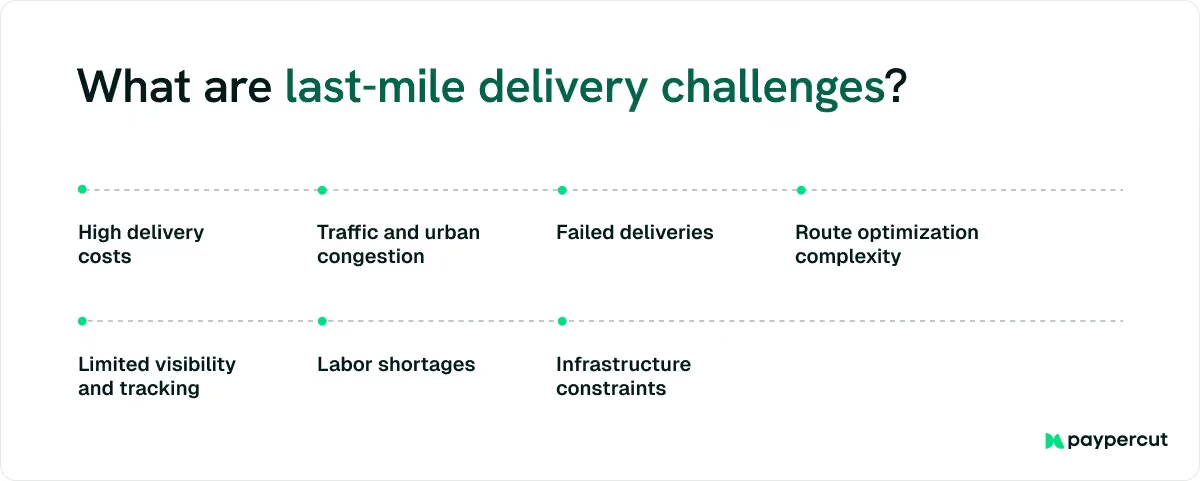
This makes it harder to offer a smooth and predictable experience across different countries.
How to solve it
You should aim to make delivery as simple and reliable as possible by:
- Starting with a core market, then expanding step by step
- Working with reliable regional couriers (e.g., DPD, GLS)
- Using local warehouses or 3PL partners to speed up delivery
- Offering straightforward delivery times and tracking updates
Even if there are any issues, it’s crucial to keep customers informed, as this helps reduce frustration and makes delays easier to accept.
5. A poor website experience costs you customers
Your website is your storefront, where even small issues can have a big impact on sales.
Across Europe, average conversion rates are only 2% to 3%, meaning most visitors leave without buying.
In many cases, this abandonment rate is directly tied to your website’s performance and design.
Even a one-second delay in loading time can reduce conversions, and a complicated checkout can push customers away at the final step.
How to solve it
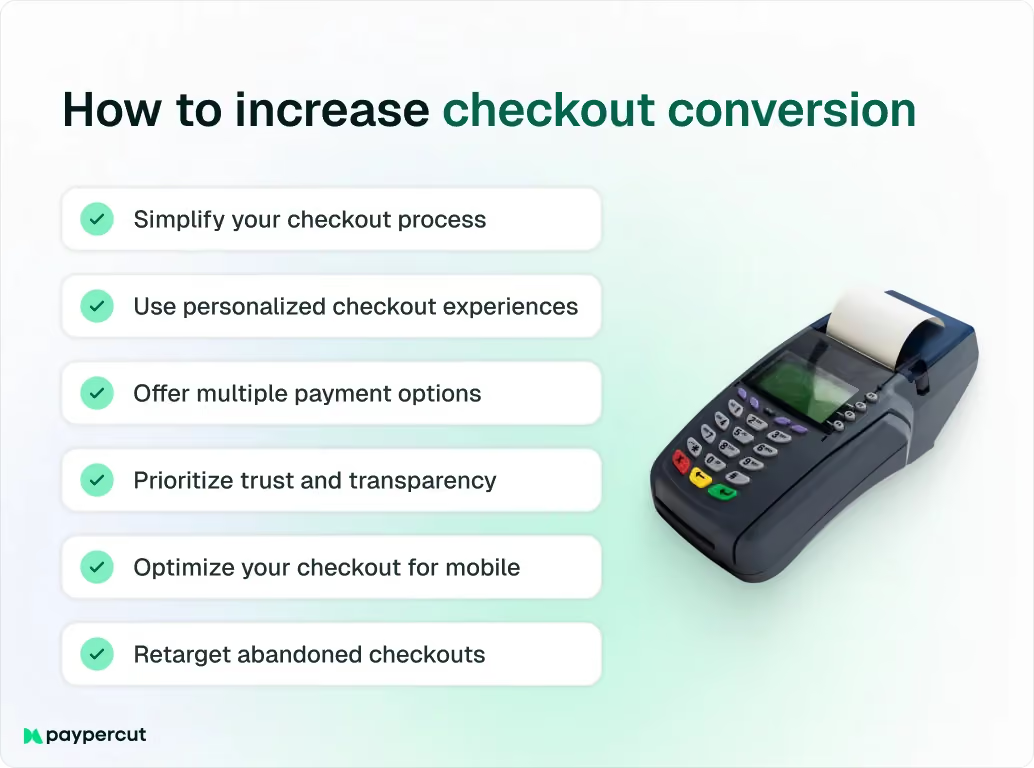
Focus on making the checkout process as smooth as possible, as simplifying this experience can increase conversion rates by up to 35%. In addition, consider the following steps:
- Optimizing for mobile-first experience
- Improving loading speed through lighter images and fewer plugins
- Keeping navigation clear and easy to follow
6. Cash on delivery can hurt your cash flow
In many CEE markets, cash on delivery (CoD) is still widely used. In some countries, over 60% of online stores offer it, while in markets like Bulgaria, CoD usage surpasses 80%.
While this gives customers a sense of safety, it creates real challenges for businesses.
Orders can be rejected at the door, returns are higher, and cash flow becomes harder to manage.
In some cases, customers order multiple items and only keep one, increasing costs even further.
How to solve it
The goal is to offer the same flexibility as CoD but without the risk.
You can primarily do so by offering Buy Now, Pay Later (BNPL) as a payment method.
This method allows customers to receive the product first and pay later—either after a set period or in installments—through a third-party provider.
For the customer, BNPL feels similar to CoD since they don’t have to pay for the product(s) upfront. However, this option is much safer for the businesses, as the BNPL provider pays them upfront and takes on the risk of non-payment.
This makes BNPL a more predictable and scalable alternative to CoD, especially in markets where trust and flexibility are key.
Pro tip:
BNPL isn’t the same across all CEE markets. Countries like Poland or Romania have different providers, approval rates, and customer preferences.
That’s why it’s often better to work with a BNPL aggregator instead of integrating a single provider.
Paypercut is the first BNPL aggregator of its kind in CEE, allowing merchants to connect with multiple BNPL providers through a single integration and manage them all from one place.
In practice, this means that customers see locally relevant BNPL options at checkout, allowing merchants to increase completed purchases and expand across CEE without extra technical work.

7. Data and security mistakes can cost you trust
Online businesses deal with personal and payment information, which makes security and privacy a key concern.
With regulations like GDPR in place, businesses are expected to protect data and be clear about how it’s used. Otherwise, they face harsh penalties, with regulators issuing around €1.2 billion in GDPR fines in 2025 alone.
At the same time, cyber threats are becoming more advanced, and even a single data breach can damage customer trust and your reputation. Unfortunately, data breaches are also becoming more frequent, having seen a 22% annual increase in 2025.
How to solve it
You must take all the necessary steps to protect customer data and keep your systems secure, which primarily includes using secure payment methods and trusted providers, as well as keeping all systems updated and protected.
To help customers feel safe, you should:
- Add visible security signals (e.g., SSL, secure checkout)
- Clearly explain how customer data is collected and used
- Only collect the data you actually need
8. Payment issues can slow down your business
Handling payments online isn’t always straightforward.
Fees, chargebacks, and delayed payouts can all affect your cash flow and make it harder to grow consistently.
In CEE, this becomes even more complex, as payment preferences vary widely between countries.
For example, in Poland, local methods like BLIK dominate online payments, with billions of transactions processed each year.
In contrast, in Romania, online banking adoption is still relatively low, so many customers rely more on CoD or traditional payment methods.
This mix of preferences makes it harder to offer a one-size-fits-all checkout experience.
How to solve it
The goal is to make payments easy for customers and predictable for your business. You can meet this goal by:
- Offering multiple payment methods, including local options
- Using a reliable payment provider with backup solutions
- Monitoring and reducing chargebacks with clear policies and support
- Keeping track of payouts to manage cash flow effectively
Pro tip:
Just like with BNPL, payment preferences vary across CEE, so relying on a single method often isn’t enough.
A better approach is to use a payment system, which lets you offer multiple payment methods through one setup, adapted to each market.
Paypercut does exactly that.
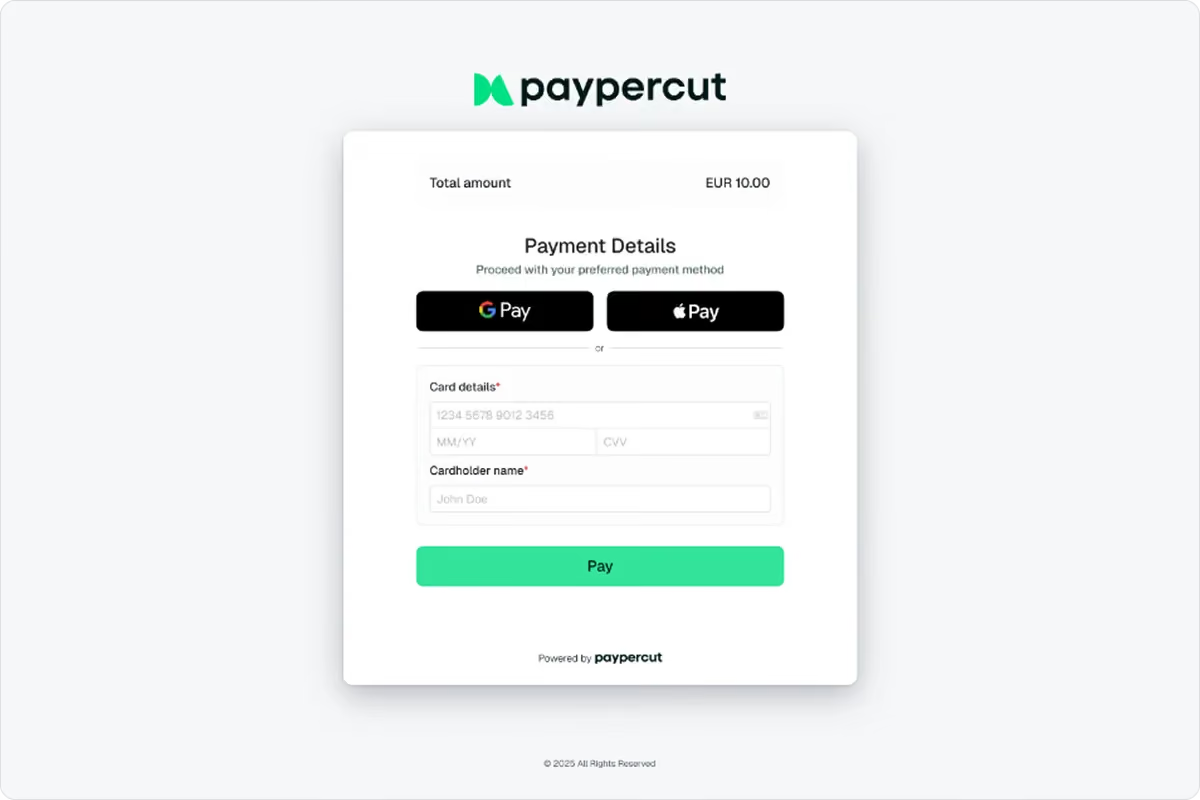
It gives you access to cards, digital wallets, local payment methods, and BNPL in one platform.
Payouts go directly to your existing bank account in your local currency—no new accounts to open, no currency conversion headaches—making payments simpler for your customers and more predictable for your business.
Solve the biggest challenges faced by online businesses with Paypercut
Most of the challenges faced by online businesses can be managed with the right setup.
A big part of that comes down to the tools and partners you choose.
By choosing Paypercut, you aren’t only getting a partner that processes payments but one that helps remove friction, reduces conversion drop-off, and supports growth across markets.
The table below breaks down how Paypercut helps you tackle the biggest challenges for online businesses beyond payment and BNPL aggregation:
Beyond solving individual challenges, the real advantage comes from simplifying how your business runs overall.
Paypercut is built to help you grow without adding complexity.
- You can expand across multiple European markets while keeping a consistent setup and settling directly into your existing bank account and preferred currency.
- Onboarding is fast and fully digital, so you can go live quickly without heavy development work.
- There are no setup fees or lock-in contracts, which keeps costs predictable as you scale.
- You get access to a self-serve portal that gives full visibility into transactions and performance, making it easier to manage and optimize your operations.
And when you need support, you’re not left on your own—you get real, human help when it matters.
If Paypercut sounds like the perfect partner for your online business, sign up for an account today. If you need help in finding the best setup for your business, book a 30-minute consultation with the Paypercut team.
FAQ
What are the challenges faced in online business?
The main challenges faced in online business include high competition, rising customer acquisition costs, building trust, managing delivery, optimizing website performance, handling payments, and keeping customer data secure.
What is the biggest challenge for most businesses when going online?
The biggest challenge for most businesses going online is standing out and converting visitors into customers. Many businesses can get traffic, but struggle to turn it into sales due to trust, pricing, or checkout issues.
What is your biggest challenge in promoting online?
The biggest challenge in promoting online is keeping customer acquisition costs under control. Ads are more expensive and less predictable, so businesses need to balance paid channels with organic growth and retention.