
Starting a dropshipping business in Hungary is quite straightforward. In most cases, you’ll need to register a business, set up your taxes, and choose the right partners for product sourcing and payments.
That’s the short version.
But once you get into the details, there are a few important things to get right, including which business type makes sense for you, how value-added tax (VAT) works when selling across the European Union, and how to accept different forms of payments without unnecessary complexity.
This guide covers all the ins and outs of dropshipping in Hungary, so you know what to expect and how to set things up the right way.
Key takeaways
- Hungary is a strong and growing dropshipping market
A growing e-commerce sector, central EU location, and rising online demand make Hungary a practical place to start and scale a dropshipping business. - Getting the basics right matters more than complexity
Choosing the right business structure, understanding VAT, and following consumer and data protection rules are essential to avoid issues and run smoothly. - Your niche and suppliers directly impact your success
Focusing on a clear niche and working with reliable, preferably EU-based suppliers helps you stand out, deliver faster, and keep customers satisfied. - Localization and trust drive conversions
Using the Hungarian language, local currency (HUF), clear policies, and transparent business details makes your store more credible and easier for customers to buy from. - Offering the right payment mix can increase sales
Hungarian shoppers use a mix of COD, cards, transfers, and digital wallets, so offering multiple options is key. Using a solution like Paypercut helps you bring all of these methods together in one place, making payments easier to manage and helping you convert more customers.
Why start dropshipping in Hungary
Hungary offers a solid environment for starting a dropshipping business, especially if you’re looking for a market that’s growing but still relatively accessible.
The local e-commerce market is expanding steadily, with revenues expected to grow from €4.57 billion in 2026 to €6.79 billion by 2031.
That said, market size is only part of the picture.
What really makes Hungary interesting for dropshipping are the practical advantages that make it easier to start, operate, and scale. These include:
- Strategic location: Hungary sits in the center of Europe, which makes it easier to reach both Western and Eastern European customers with shorter delivery times.
- Growing online demand: A rising middle class with solid purchasing power is increasingly shopping online, creating steady demand across categories like fashion, home goods, and electronics.
- Flexible payment preferences: Many customers prefer options like Cash on Delivery (COD), but digital payments and Buy Now, Pay Later (BNPL) are also growing quickly, giving you flexibility in how you sell.
- Local fulfillment options: Local partners and warehouses can help you deliver faster, which improves customer experience and reduces returns.
Legal and practical basics of dropshipping in Hungary
Starting a dropshipping business in Hungary comes with some legal and tax basics you’ll need to cover.
The sections below walk you through them in simple terms.
Keep in mind that this is general guidance, not legal or tax advice.
Choosing your business model
Before you start selling, you’ll need to decide how to structure your business.
In Hungary, most dropshipping businesses choose between two main options:
- Sole proprietor (Egyéni vállalkozó or EV)
- Limited liability company (Korlátolt felelősségű társaság or Kft.)
Sole proprietorship is the simplest way to get started.
You run the business as an individual, with low setup costs and minimal admin.
It’s a popular choice for testing a dropshipping idea or running a small online store.
The trade-off is that you’re personally responsible for any business debts.
That’s not the case with a limited liability company, which separates your personal and business finances, reducing your personal risk.
This option is often a better fit if you plan to grow, work with larger partners, or build a long-term brand.
It does require more setup, including initial capital and ongoing accounting.
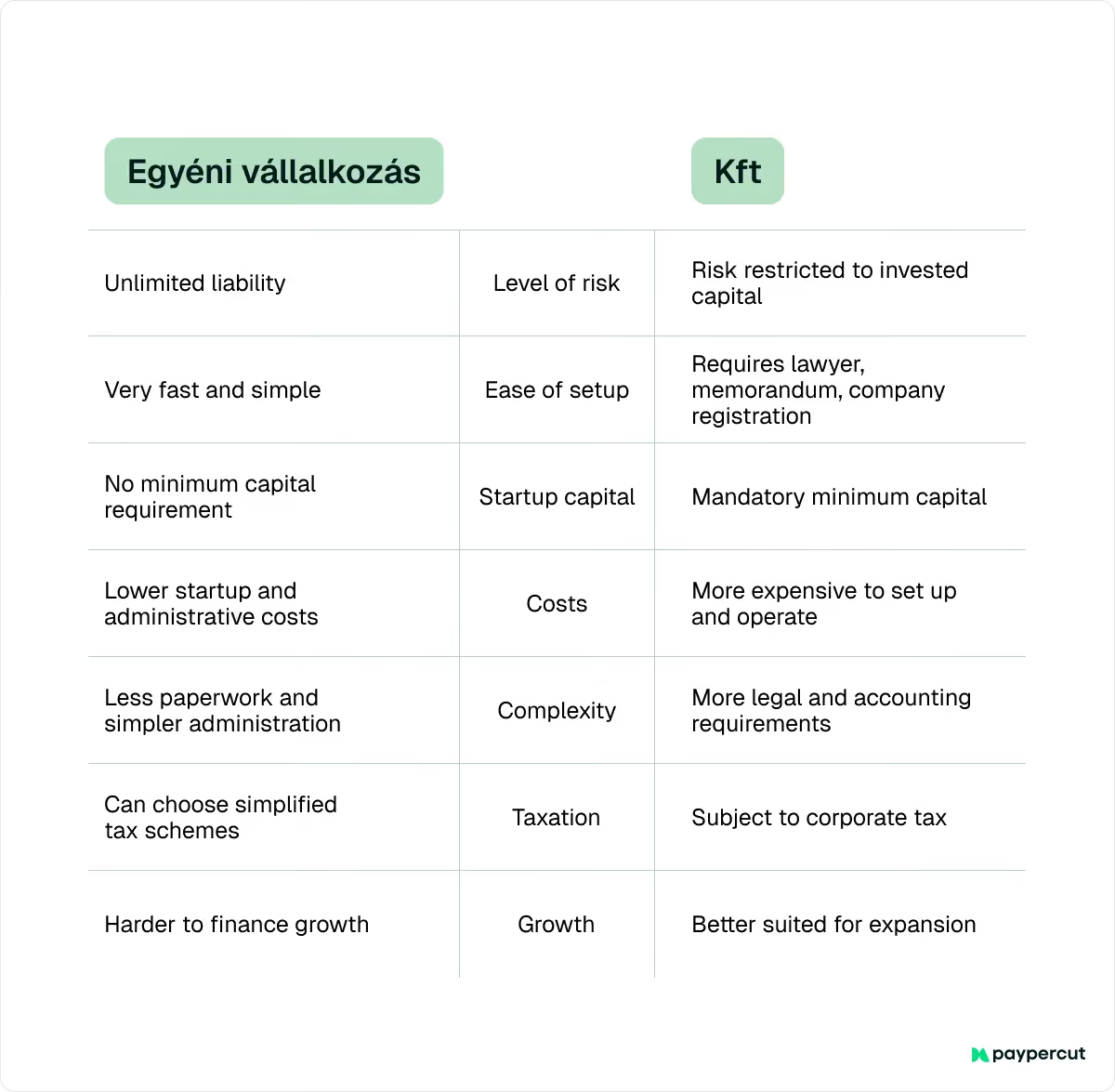
In practice, many businesses start as sole proprietors and switch to a company structure later as they scale.
Understanding your tax obligations
Taxes are a key part of running a dropshipping business in Hungary.
The two main taxes to understand are VAT and income tax.
VAT is a consumption tax added to most goods and services. In Hungary, the standard rate is 27%.
You’ll need to register for VAT if your annual revenue exceeds 18 million forint (around €46,000).
Once registered, you’ll need to charge VAT on your sales and report it to the tax authorities.
If you’re selling to customers in other EU countries, VAT can apply even below this threshold.
In many cases, businesses use the One Stop Shop (OSS) system, which lets you report and pay VAT for all EU sales in one place instead of registering in multiple countries.
As for income tax, how you pay it depends on your business structure:
- Sole proprietor: You report your business income as part of your personal tax return.
- Company: Your business pays corporate tax on its profits.
Keeping traceable records of your sales and expenses will make taxation much easier and help you avoid issues later on.
Handling imports and exports
With dropshipping, your products are often shipped across borders, so it’s important to understand how imports and exports work in practice:
- Selling within the EU: If your supplier is based in the EU and you’re selling to EU customers, things are relatively straightforward. There are no customs duties, and shipping is usually faster and easier to manage.
- Importing from outside the EU: If you’re sourcing products from countries like China or the United States, you’ll have to pay customs duties (import taxes) and VAT when goods enter the EU.
No matter where your products come from, they must meet EU standards on product safety, labeling, and consumer protection rules.
As the seller, you’re responsible for making sure these requirements are met, even if you never handle the product yourself.
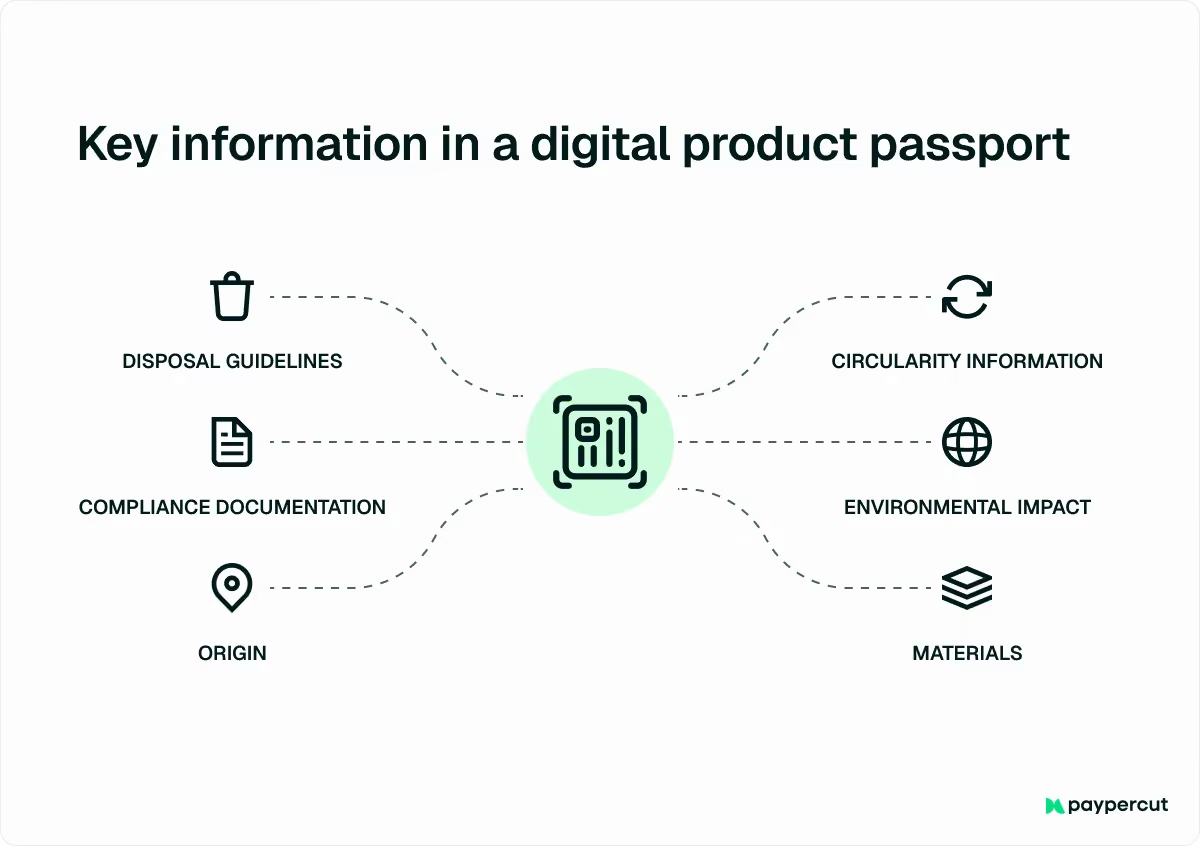
Products with high environmental impact or circularity potential also require the Digital Product Passport (DPP), so make sure you check the rules before adding them to your store.
Protecting customer data
When running a dropshipping business in Hungary, you’ll also need to follow the General Data Protection Regulation (GDPR). This is the EU’s data protection law, and it applies to any business that collects or uses customer data.
In practice, this means being transparent about how you handle information like names, addresses, and payment details and making sure that data is kept secure and only shared with suppliers and logistics partners that also follow GDPR rules.
Following consumer protection rules
Hungary follows strict EU consumer protection rules, which are designed to make online shopping safe and transparent.
Here are the key requirements to keep in mind:
- Accurate product information: You need to provide accurate details about your products, including pricing, features, and delivery times to help customers make informed decisions.
- 14-day return period: Customers have the right to return most products within 14 days of receiving them, without needing to give a reason. You’ll need to offer a full refund in these cases.
- Warranty obligations: Most products come with a two or three-year warranty, meaning you’re responsible if something is faulty or doesn’t work as expected.
- Fair business practices: You must avoid misleading product descriptions, hidden fees, or unclear pricing. Being transparent builds trust and helps you avoid penalties.
Even though suppliers and logistics partners handle fulfillment, you remain the seller in the eyes of the customer, so these responsibilities fall on you.
How to start dropshipping in Hungary in 6 practical steps
Starting a dropshipping business in Hungary can be broken down into six simple steps.
1. Choosing your niche
Before anything else, you need to decide what you’re going to sell, as this has a big impact on your margins, competition, and long-term growth.
Hungary’s e-commerce market is in a high-growth phase, which is why popular categories can be competitive.
That’s why a good starting point is to look at categories that already perform well, then narrow them down with your own angle (for example, eco-friendly products, premium quality, or faster delivery).
Here are some of the top-performing categories in Hungary:
2. Creating your business strategy
When creating a business strategy, you don’t need anything complicated, just an idea of who you’re selling to, how you’ll position your products, and how you’ll reach your customers.
Here are the key elements to think about:
- Target audience: Who are your ideal customers? Think about their needs, preferences, and how they shop online.
- Product positioning: What makes your offer different? This could be pricing, quality, branding, or faster delivery.
- Pricing strategy: How will you price your products? Your pricing should stay competitive while still covering product costs, shipping, transaction fees, and marketing, with room left for profit.
- Sales channels: Where will you sell: your own store, marketplaces, or a mix of both?
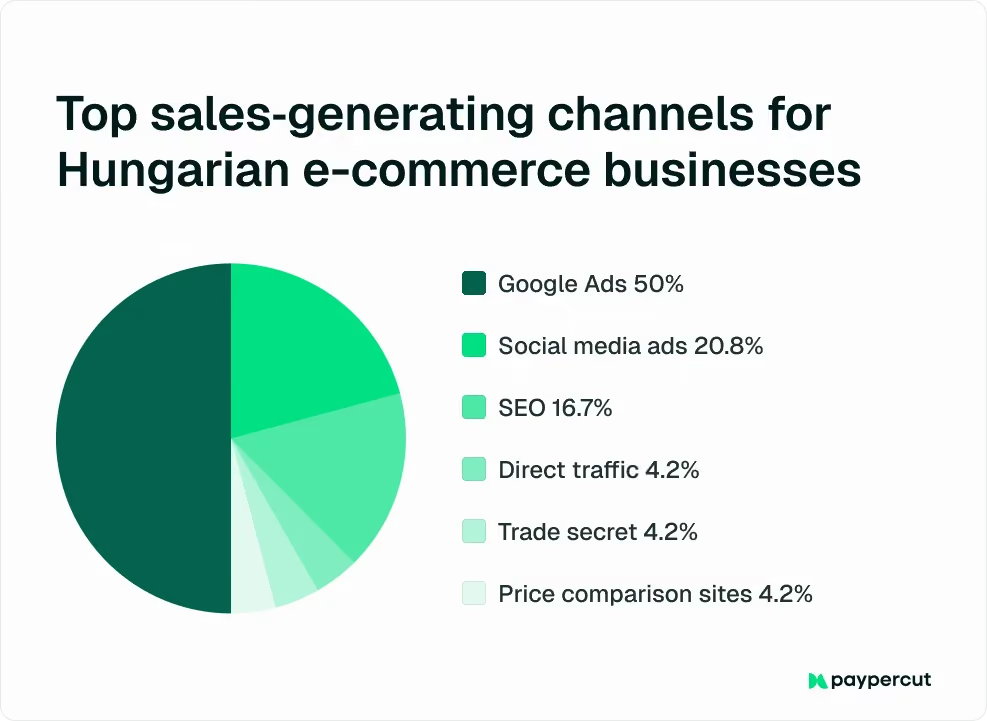
- Marketing approach: How will you attract customers? In Hungary, 87.5% of merchants have found great success with Facebook, while Google Ads drives the largest share of sales.
3. Find high-quality suppliers
One of the biggest challenges in dropshipping is that you don’t control the product, shipping, or fulfillment.
That’s why choosing the right supplier is critical.
A reliable supplier helps you deliver a consistent experience and avoid common issues that can hurt your reputation.
Here’s what to pay attention to:
- Location: Suppliers based in the EU (or Hungary) enable faster delivery, lower shipping costs, and fewer customs issues.
- Product quality: Poor-quality products lead to returns and unhappy customers, so it’s worth testing samples before selling.
- Product range: A well-curated catalog with variations (e.g., sizes, colors, price points) gives you more flexibility to grow.
- Reliability: Consistent delivery times and accurate order fulfillment are key to maintaining customer trust.
- Pricing and margins: Competitive pricing helps you stay profitable after covering shipping, fees, and marketing costs.
- Communication: Fast and clear communication makes it easier to resolve issues and manage orders smoothly.
If possible, start with one or two reliable suppliers and build from there instead of juggling too many at once.
4. Register your business
As a sole proprietor, you can register your business through an online government portal (Ügyfélkapu), while companies are registered through the Court of Registration, usually with legal assistance.
Afterward, you’ll need a tax number from the Hungarian tax authority (NAV). This is what identifies your business for all tax-related matters.
5. Build your online store
Your online store is where customers discover your products, so both how your store looks and how well it fits the local market really matter.
Here’s what to focus on:
- Language: Use Hungarian across your store, including product descriptions, checkout, and customer communication, to make the experience feel local and trustworthy.
- Currency: Display prices in Hungarian forint (HUF) to avoid confusion and reduce friction at checkout.
- Informative product pages: Make sure your product descriptions, images, pricing, and delivery times are accurate and easy to understand.
- Transparent business information: By law, your store must clearly show who you are and how customers can contact you. This includes your business name, address, email, and registration and tax details.
- Terms and policies: Make your terms and conditions, return policy, and other key information easy to access and store.
6. Set up your payment methods
In Hungary, payment preferences vary, and offering the right one can directly impact your conversion rates.
Here are the main payment methods to consider:
- Cash on delivery (COD): Used by 61% of online shoppers in 2024, making it one of the most important options for local trust and conversions.
- Debit and credit cards: Almost 2 billion card payments were made in 2024, with usage growing steadily as more people shop online.
- Bank transfers (instant payments or Azonnali Fizetés): Hungary’s instant payment system allows transfers in seconds, making this a reliable option for many customers.
- Digital wallets: Over 25% of card payments are already made through mobile wallets, thanks to their speed and convenience.
- Buy Now, Pay Later: BNPL is increasingly popular among younger shoppers and for higher-value purchases, helping customers spread out costs.
- QR code payments: A newer but growing option, with over 400,000 transactions already completed through Hungary’s instant payment system.
Pro tip:
Don’t rely on just one payment method. The more options you offer, the easier it is for customers to complete a purchase.
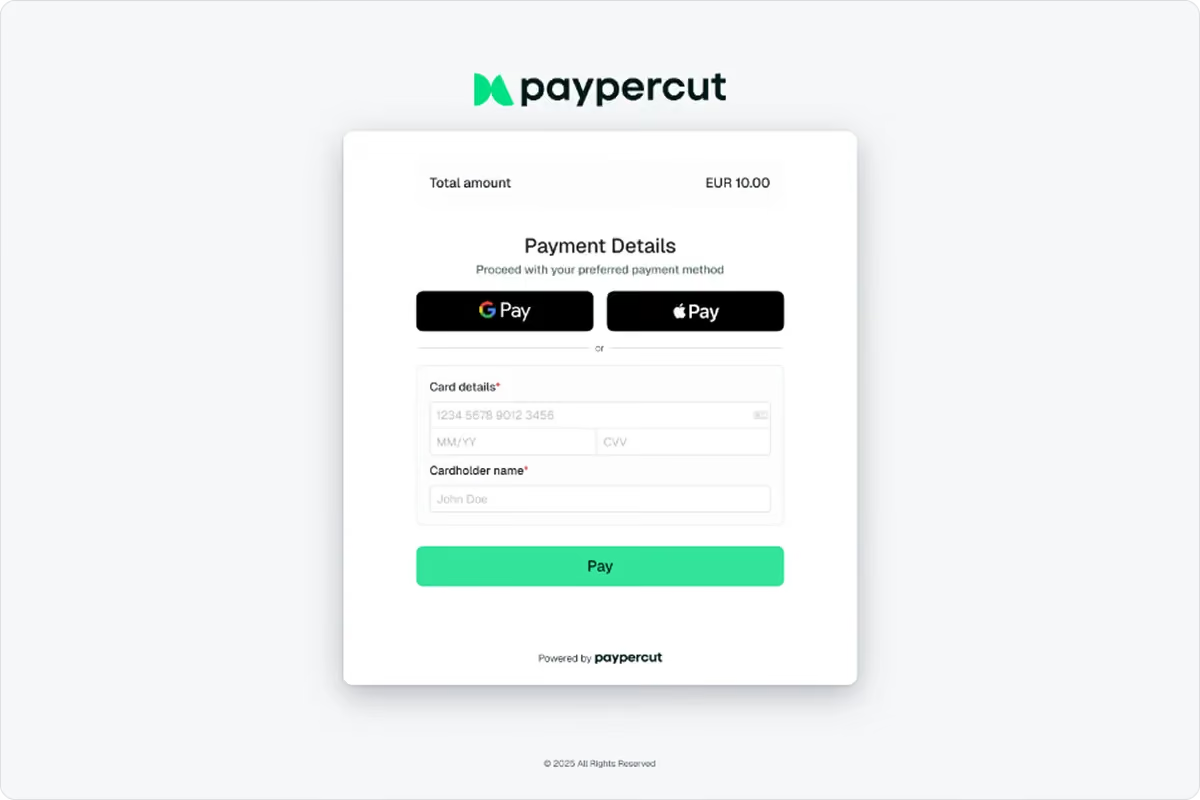
One simple way to do this is by using a payment system like Paypercut.
Instead of dealing with the hassle of integrating each payment method separately, you can set everything up in one place, including cards, digital wallets, QR payments, and multiple BNPL providers.
That’s especially helpful for dropshipping, where you want things to stay as simple and efficient as possible.
Simplify payments with Paypercut
Choosing your payment partner carefully is just as important as choosing your supplier.
While your supplier handles product quality, packaging, and delivery, your payment provider is responsible for how smoothly customers can complete their purchase and whether they convert at all.
When partnering with Paypercut, you get:
- Access to multiple payment methods: Accept cards, digital wallets, BNPL, payment links, QR codes and more through a single setup.
- Support for European markets: Handle local currencies, payment preferences, and regulations automatically.
- Flexible payment setup: Choose between hosted, embedded, or express checkout, and e-commerce plugins.
- Fast and simple integration: Connect your store using plugins or APIs without complex development.
- Transparent pricing: Pay a clear, predictable fee with no hidden costs or long-term contracts.
Beyond features, what really matters in dropshipping is reliability and support. If you’re dealing with a failed payment, a delayed payout, or a confused customer, you need quick answers.
With Paypercut, you get real human support, not just automated responses, so you can resolve issues faster and keep your business running smoothly.
If you’re already on the final step of starting your dropshipping business in Hungary, you can register with Paypercut right away and start accepting payments quickly. If not, book a 30-minute consultation with the Paypercut team to get help setting everything up while you complete the rest of your setup.
FAQ
Is dropshipping legal in Hungary?
Yes, dropshipping is legal in Hungary as long as you register your business and follow tax, consumer protection, and data protection rules.
Is Hungary a good place to start a business?
Yes, Hungary offers a growing e-commerce market, a central EU location, and a relatively simple setup for new businesses.