
As a whole, Central and Eastern Europe (CEE) doesn’t seem to have a problem with e-commerce growth.
In fact, CEE has become Europe’s fastest-growing e-commerce region, with turnover surpassing €106 billion in 2024.
What many businesses in CEE and beyond still struggle with, however, is getting customers to actually complete their purchases.
Checkout abandonment remains one of the biggest revenue leaks in e-commerce, with as many as 84% of European consumers failing to complete an online purchase at least once, and 1 in 4 doing so regularly.
To help you avoid losing customers at the finish line, this guide breaks down everything you need to know about the checkout conversion funnel, including its key stages, common friction points, and practical ways to improve conversion rates.
Key takeaways
- The checkout conversion funnel focuses on the final purchase decision
Unlike the traditional marketing funnel, the checkout conversion funnel only covers the steps between cart and completed payment. This is where buying intent is highest, but also where most revenue leaks happen. - Small checkout friction points can have a major impact on conversion
Long forms, forced account creation, hidden shipping costs, slow payment pages, and failed transactions all increase the likelihood of customers leaving before payment. - Shipping and payment are the most sensitive parts of checkout
Customers expect transparent delivery costs, fast payment flows, and payment methods they already trust. If the checkout feels confusing or unreliable, trust disappears quickly. - Mobile checkout optimization is no longer optional
With the majority of European online purchases now happening on mobile devices, businesses need checkout flows that are fast, responsive, and easy to complete with minimal typing. - A reliable payment partner can improve conversion across the entire funnel
Paypercut helps businesses across CEE reduce checkout friction by enabling local payment methods, digital wallets, BNPL, embedded checkout, recurring billing, and mobile-friendly payment flows through a single integration. This makes it easier to improve conversion rates without adding operational complexity.
What is the checkout conversion funnel?
The checkout conversion funnel is the sequence of steps a customer goes through between adding a product to their cart and completing payment.
Unlike the traditional marketing funnel—which focuses on awareness, consideration, and acquisition—the checkout conversion funnel deals with a much narrower but more critical part of the customer journey: the purchase itself.
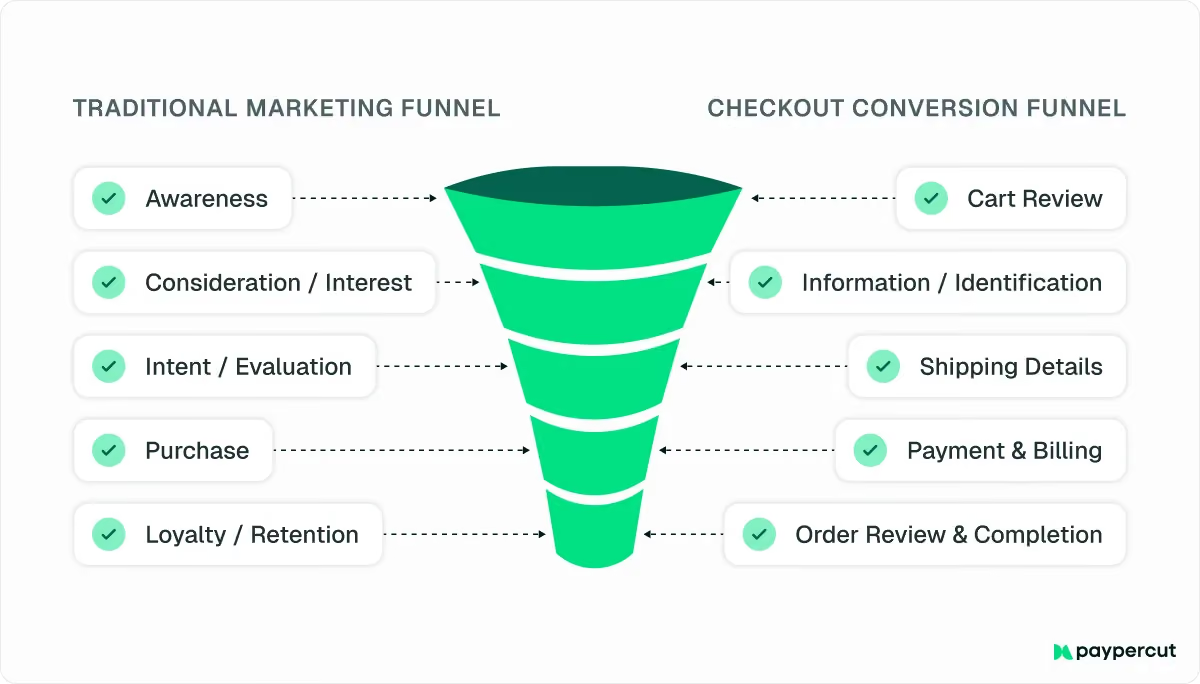
Both funnels follow the same basic principle. At every step, some users move forward while others drop off. In checkout, that drop-off is especially expensive because the customer has already shown strong buying intent.
Globally, around 69–70% of online shopping carts never turn into completed purchases—a number that has remained surprisingly consistent for years despite major advances in e-commerce user experience.
What is a good checkout conversion rate?
There is no universal benchmark for good checkout conversion rates because they vary by industry, product category, device type, and geography.
Rather than comparing themselves to a single industry average, most businesses focus on improving three key metrics:
- Checkout completion rate – the percentage of customers who complete checkout after entering it
- Cart abandonment rate – the percentage of shoppers who add items to their cart but leave before purchasing
- Payment success rate – the percentage of payment attempts that are successfully authorized and completed
Even small improvements in checkout conversion can have a significant impact on revenue because customers entering checkout have already demonstrated strong purchase intent.
The 5 main stages of the checkout conversion funnel
To improve checkout performance and reduce drop-offs, businesses first need to understand where customers hesitate, lose trust, or change their minds during the buying process.
While checkout may feel like a single action from the customer’s perspective, it’s actually a sequence of smaller decisions.
Each of these five stages introduces different expectations, concerns, and potential friction points that can affect whether a purchase gets completed or not.
1. Cart review: Where customers reconsider the purchase
This stage begins once a customer opens their cart before proceeding to checkout.
At this point, they are no longer browsing casually but actively evaluating whether the purchase still feels worth it.
To make this decision, customers typically review:
- Product details
- Quantities
- Discounts
- Taxes
- Final price
2. Customer information: Where friction starts to build
Once customers move into checkout, they’re asked to provide shipping, billing, and contact information.
This is where checkout often begins to feel slow or frustrating, especially on mobile devices.
Long forms, mandatory account creation, or poor input design can interrupt momentum and cause customers to leave before completing their purchase.
For many businesses, this stage is also where the balance between data collection and convenience becomes visible. Asking for too much information too early can hurt conversion rates.
3. Shipping selection: Where delivery expectations influence conversion
Before moving to payment, customers usually choose how and when they want to receive their order. While this may seem like a logistical step, shipping decisions often have a direct impact on whether the purchase gets completed.
At this point, customers compare the following:
- Delivery costs
- Shipping speeds
- Estimated arrival dates
- Available delivery methods
The price and speed of shipping are the two leading factors of customer frustration, making over half of customers reconsider their purchase altogether.
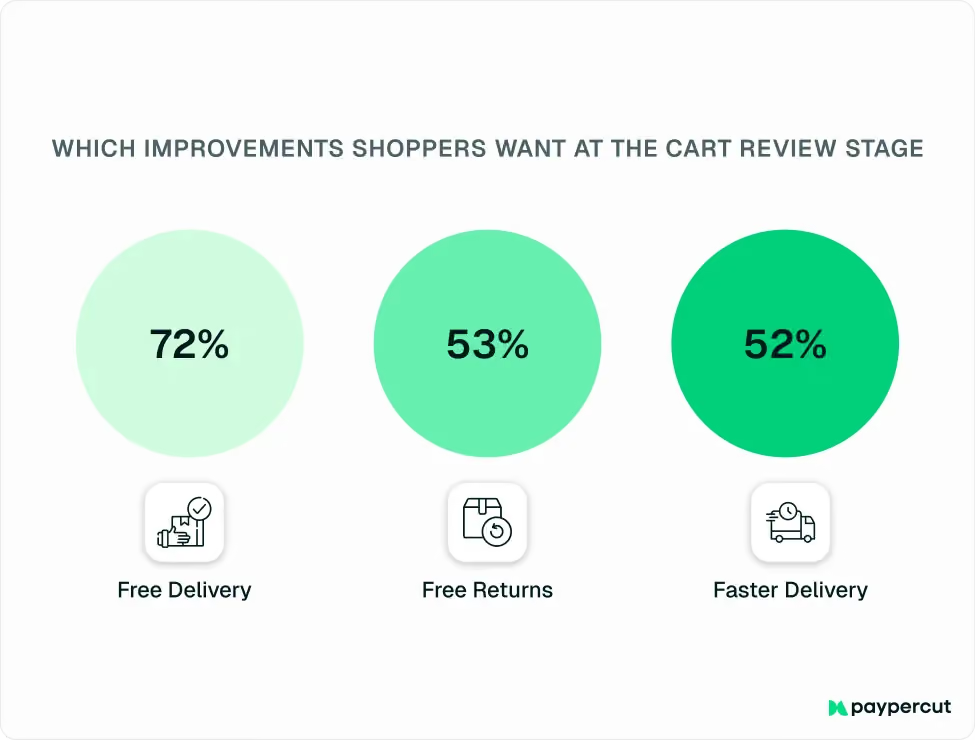
If you can’t offer free or ultra-fast delivery, you should at least be fully transparent about what customers can expect. Unexpected shipping fees or vague delivery timelines are still among the most common reasons customers leave checkout before reaching payment.
4. Payment stage: Where purchase intent is tested
The payment stage is often the most sensitive part of the entire funnel.
By this point, customers have already decided they want the product, but the payment experience itself can still determine whether the transaction succeeds.
Your main obstacles during this stage of the checkout conversion funnel include:
- A lack of trust with payment information (19% of shoppers)
- A lack of varied payment methods (10%)
- A failed transaction (8%)
Slow-loading payment pages and unfamiliar payment flows only add fuel to the fire, creating enough doubt for customers to exit at the last moment.
Pro tip:
Unlike other parts of the checkout funnel that may require dozens of small UX and conversion tweaks, many payment-related friction points can often be reduced by improving the payment experience itself, including payment method availability, transaction reliability, and mobile usability.
With Paypercut, businesses can offer local payment methods, digital wallets, Buy Now, Pay Later (BNPL), and mobile-friendly checkout flows through a single integration.
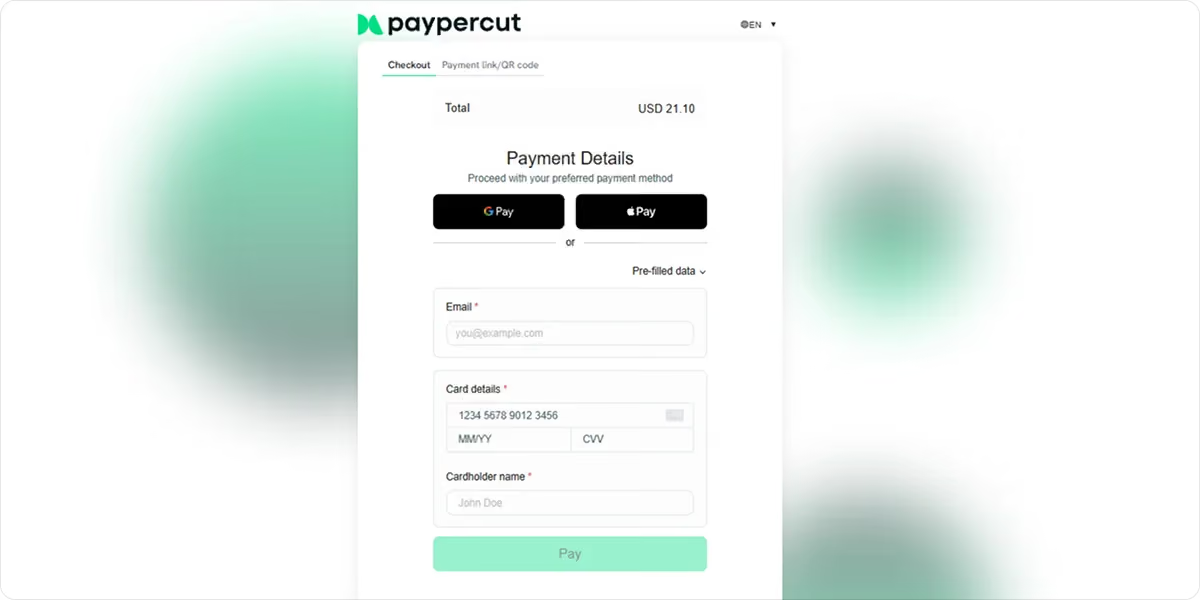
Plus, features like one-click e-commerce plugins, automatic retry logic for failed payments, and PSD2-compliant security help reduce friction without adding operational complexity for merchants.
5. Order confirmation: Where the experience continues after payment
While the transaction is complete once the payment is approved, the customer experience continues long after checkout.
The post-purchase stage plays an important role in customer confidence, retention, and future purchases.
After completing an order, customers expect immediate confirmation that the payment went through successfully.
Clear receipts, confirmation emails, delivery updates, and transparent refund information all help reduce uncertainty after purchase.
For subscription businesses or merchants offering recurring payments, this stage becomes even more important. Customers want clarity around billing, renewals, and payment management long after the initial checkout is complete.
How to optimize your checkout conversion funnel: 5 crucial steps
To optimize your checkout conversion funnel, you need to reduce the friction points that cause customers to hesitate, lose trust, or leave before completing payment.
There are countless small ways to improve checkout performance, but some changes consistently have a bigger impact on conversion than others.
These five steps address the most common causes of checkout drop-offs and typically deliver the most noticeable improvements.
Step 1: Simplify the path to purchase
The longer and more complicated the checkout feels, the more likely customers are to leave before completing payment.
The table below highlights some of the most effective ways to make checkout feel faster and easier for customers:
In many cases, convenience matters more than collecting extra customer data.
Step 2: Offer payment methods customers already trust
Customers are far more likely to complete checkout when they see familiar and locally relevant payment options.
For CEE merchants, this often means going beyond standard card payments and supporting digital wallets, BNPL providers, and localized payment methods that customers already use in their market.
Helpful reading:
Read these guides to learn more about the leading payment methods in top CEE markets:
- 6 most popular payment methods in Poland: A complete guide for merchants
- How to accept payments in Hungary [6 popular payment methods in Hungary]
- How to accept payments in Romania [5 top payment methods]
Step 3: Make mobile checkout feel effortless
Mobile traffic continues to grow across e-commerce, with 83.4% of European online purchases now happening through mobile devices.
That’s why your checkout experience must be optimized for mobile. Here’s how you can achieve that:
In short, customers should be able to complete a purchase comfortably with one hand and minimal typing.
Step 4: Build trust before customers have doubts
Checkout is the point where customers become most sensitive to anything that feels unclear or risky.
Visible security indicators, recognizable payment methods, transparent pricing, and easy-to-find refund policies all help reassure customers before payment.
Consistency also matters.
If the checkout experience suddenly looks different from the rest of the store, customers may hesitate even if the site itself is legitimate.
For cross-border merchants, trust becomes even more important when customers are purchasing from brands they may not already know well.
Step 5: Track where customers drop off
Many checkout problems only become visible once businesses start analyzing funnel behavior in detail.
The following metrics can help you identify where friction exists in the funnel:
- Cart abandonment rate
- Checkout completion rate
- Payment success rate
- Failed transactions
- Mobile vs. desktop conversion rates
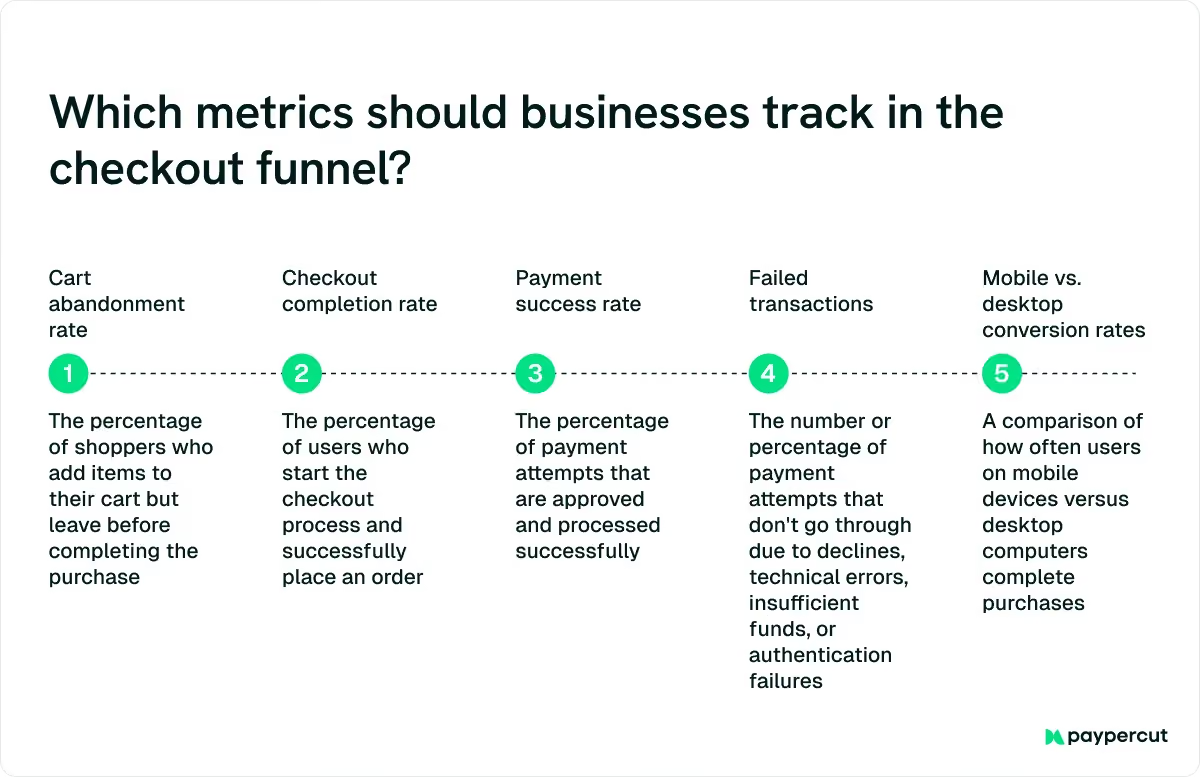
If a large number of customers leave at the same step, that usually points to a specific operational or UX issue, whether it’s slow mobile forms, limited payment options, shipping surprises, or payment authorization failures.
Build a checkout conversion funnel that customers want to complete with Paypercut
While there’s no single “perfect” checkout structure, every high-converting checkout conversion funnel shares the same characteristics: It feels fast, intuitive, and trustworthy from the cart page all the way to order confirmation.
Trust is arguably the single most important factor here, as customers are sharing payment details, personal information, and delivery addresses, often with brands they may not know well.
That’s why your job is to remove as much uncertainty as possible.
Customers should immediately understand what they are paying for, how the payment works, whether their data is secure, and what happens after the order is placed.
This is also why the payment experience itself matters so much.
Slow payment pages, unfamiliar flows, limited payment methods, or failed authorizations can break trust instantly, even after the customer has already decided to buy.
Paypercut helps businesses across CEE create smoother, more reliable checkout experiences by offering:
- Local payment methods, cards, wallets, and BNPL through one integration
- Embedded and hosted checkout options for different business models
- Mobile-friendly payment flows optimized for higher completion rates
- PSD2-compliant security and strong customer authentication
- One-click e-commerce plugins for WooCommerce, Shopify, OpenCart, Magento, and more
- Recurring billing, subscriptions, split payments, and payment links from a single platform
- Multi-currency payments and local settlement across European markets
- Payment links and QR codes for businesses without a full e-commerce checkout
Whether you are looking to optimize your checkout conversion funnel, reduce payment complexity, or expand cross-border, Paypercut has a solution for you.
Book a free 30-minute consultation to learn more or start onboarding online to instantly improve your checkout experience with Paypercut.
FAQ
What is a conversion funnel?
A conversion funnel is the path customers take from first interacting with a business to completing a desired action, such as making a purchase.
What is checkout conversion?
Checkout conversion is the percentage of customers who complete a purchase after entering the checkout process.
How to create a conversion funnel?
To create a conversion funnel, businesses map the customer journey step by step and optimize each stage to reduce drop-offs and increase conversions.
Why do customers abandon checkout?
Customers commonly abandon checkout due to unexpected shipping costs, forced account creation, long checkout forms, limited payment methods, failed transactions, and concerns about payment security.