
To increase checkout conversion in 2026, you need to remove anything that slows customers down or makes them hesitate at the final step.
This matters because the average 2026 checkout conversion rate in Europe is just around 20%. That means that out of 100 people who initiate the checkout process, only 20 actually go through with the purchase, while the rest drop off somewhere along the way.
To help you raise this percentage as much as possible, we break down what actually drives checkout conversion in 2026, along with 10 practical ways to improve it.
Key takeaways
- Checkout conversion rates show how many ready-to-buy customers you actually convert
Unlike overall conversion rates, this metric focuses on high-intent users. Improving it means getting more value from traffic you already have, not just attracting more visitors. - Most lost revenue happens at checkout, not earlier in the funnel
If customers reach checkout but don’t finish, you’re losing sales at the easiest point to convert. Fixing issues here can recover a meaningful share of revenue without extra marketing spend. - Small checkout issues have a big impact on conversion
Extra steps, missing payment methods, unclear costs, or weak trust signals can quickly push customers away. Even small improvements like simplifying forms or showing total costs upfront can increase completion rates. - Payment methods and trust are critical at the final step
Customers expect to pay the way they prefer and feel confident doing so. Missing options like BNPL or unclear security signals can cause drop-off, even when customers are ready to buy. - The easiest way to improve checkout is to simplify payments and the experience
Instead of building everything from scratch, solutions like Paypercut let you offer multiple payment methods, secure transactions, and flexible checkout options in one setup. This makes it easier to remove common barriers and turn more checkouts into completed purchases.
What is a checkout conversion rate?
Checkout conversion rate is the percentage of shoppers who start the checkout process and actually complete their purchase.
For example, if 100 customers reach your checkout and 30 of them finish the purchase, your checkout conversion rate is 30%.
It’s important not to confuse the checkout conversion rate with the overall conversion rate.
The latter looks at all website visitors, which means it’s also significantly lower on average—around 3.2% in Europe.
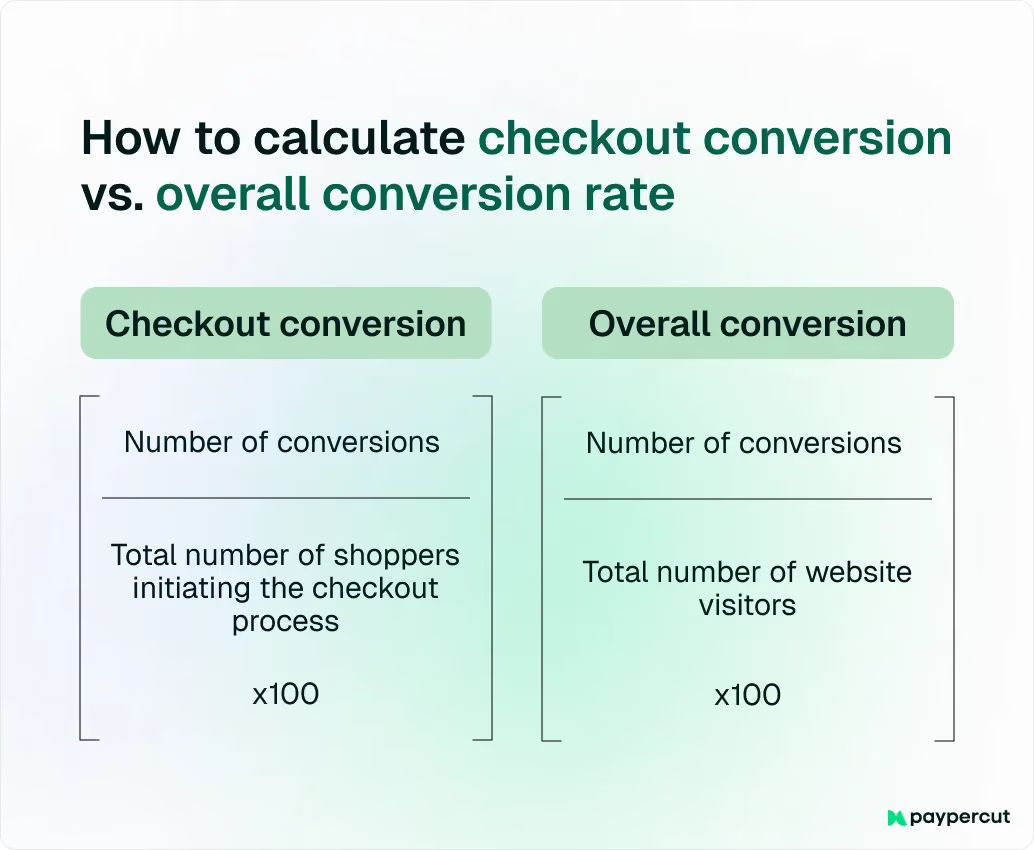
The checkout conversion rate focuses only on people who already showed a strong intent to purchase from your website by starting checkout, which is what makes it so important.
Why checkout conversion rate matters (and what it tells you about your business)
The checkout conversion rate is more than a percentage. It’s a quick way to see what’s helping customers buy and what’s pushing them away.
Here are five valuable insights it can give you.
1. It shows you where customers drop off
Checkout conversion rate shows how smooth your buying experience really is. If a lot of customers start checkout but don’t finish it, it’s a clear sign that something is getting in their way.
To understand where the problem is, you need to look at each step of the checkout process: shipping, payment, and the review page.
If many users leave at the same step, that’s where the friction is, whether it’s too many fields or slow page loading.
2. It reflects how much customers trust your store
Checkout is where customers decide if they feel comfortable paying you. If many of them drop off at this stage, something probably feels unclear or unreliable.
A higher checkout conversion rate usually means your checkout feels safe, transparent, and easy to trust.
3. It confirms whether your payment options match customer preferences
Even if customers trust your store, they may still drop off if they don’t see their preferred payment method.
For example, Buy Now, Pay Later (BNPL) has grown quickly in markets like Poland, where many shoppers expect it as a standard option. As many as 40% of Polish shoppers of all ages didn’t complete checkout in 2023 because this payment option was missing.
4. It points to how much revenue you’re losing at the final step
If many customers reach checkout but don’t complete the purchase, you’re losing revenue right at the point where it should be easiest to convert.
By comparing how many people start checkout vs. how many finish it, you can clearly see how much revenue is slipping through—and how much you can recover by improving the checkout experience.
Research has shown that with a solid strategy in place, you can recover as much as 18% to 26% of lost transactions.
5. It helps you test changes and see what actually improves checkout
Every change you make in checkout can be measured through your checkout conversion rate.
If the rate goes up, the change helped. If it drops, something made the experience worse.
This lets you improve your checkout step by step, based on real results instead of guesswork.
10 practical ways to increase checkout conversion in 2026
Here are 10 ways to address the most common causes of checkout drop-off and increase your conversion rate in the process.
1. Simplify your checkout process
A complicated checkout is one of the main reasons customers don’t complete their purchase. Every extra step, field, or delay adds friction and gives customers a reason to leave.
After all, at this stage, customers don’t want to make extra effort; they just want to finish the purchase.
The solution is to make checkout as simple and fast as possible, and the table below shows you how you can go about it:
The easier it is to complete the order, the more customers will actually do it.
The most direct way to achieve this is Express Checkout—Apple Pay and Google Pay buttons that appear directly on your product page, before customers even reach a checkout form.
There's no page to navigate to, no fields to fill in, and no steps in between.
Customers tap once, authenticate with Face ID or their device PIN, and the purchase is done.
2. Offer guest checkout
Allowing shoppers to check out as guests is technically part of simplifying your checkout. But because it has such a direct impact on conversion, it deserves its own focus.
For many customers, being forced to create an account is a dealbreaker. Around 1 in 5 shoppers abandon checkout because of it.
At the same time, the European Data Protection Board recommends giving users the option to purchase without creating an account, as part of data protection by design.
So, adding this option to your website matters because it:
- Removes a common barrier at checkout
- Speeds up the purchase, especially for first-time buyers
- Builds trust by not forcing data collection upfront
Pro tip:
Make the guest option clearly visible and easy to choose. Almost half of merchants don’t, which has the same effect as not offering it at all.
3. Use personalized checkout experiences
Personalization at checkout can help reinforce the customer’s decision to buy by making the experience feel more relevant and tailored to them.
To achieve this, consider:
- Highlighting saved addresses or preferred delivery options
- Showing previously viewed or favorited items as a quick reminder
- Displaying relevant discounts or offers based on past behavior
4. Offer multiple payment options
Customers today expect to pay the way they’re used to. If their preferred method isn’t available, about 1 in 10 shoppers won’t switch, but simply leave.
That’s why offering multiple payment options is now a basic requirement if you want to convert more customers, especially across different markets.
Pro tip:
An easy way to offer a wide range of payment methods is to partner with a payment provider like Paypercut.
Instead of integrating each option separately, you get access to multiple payment methods through a single dashboard. This includes:
- Card payments (Visa, Mastercard)
- Digital wallets (Apple Pay, Google Pay)
- Multiple BNPL options

Apple Pay and Google Pay buttons can also be added to a product page directly, so customers can pay instantly, without ever reaching a checkout form.
5. Make your checkout feel safe and reliable
There are several trust-related concerns that can stop customers from completing their purchase at checkout, including:
- Payment and data security
- Delivery reliability and timing
- Product quality or accuracy
- The overall credibility of your store
Given that trust remains one of the most important factors in online shopping, addressing these concerns is key to improving checkout conversion.
You can do so by:
- Showing clear security signals (e.g. SSL, trusted payment logos like Visa or PayPal) at the payment step
- Highlighting delivery details (estimated dates, shipping method, tracking availability)
- Keeping your checkout design clean and consistent with the rest of your store
6. Be transparent about costs and policies
Unexpected costs are one of the fastest ways to lose a sale. If the total price changes at the final step too drastically, between 14% and 39% of customers will simply leave.
The same goes for unclear return policies. If customers aren’t sure what happens after the purchase, they’re less likely to take the risk.
To avoid losing sales to these issues, make everything clear before the final click by:
- Showing the full price early (including shipping, taxes, and any extra fees)
- Avoiding last-minute surprises at the payment step
- Offering clear shipping options with costs and delivery times upfront
- Displaying your return policy in checkout (timeframes, conditions, refunds)
- Highlighting guarantees like free returns or money-back options where possible
7. Optimize your checkout for mobile
Mobile is now the main way people shop, but it’s also where most drop off. Checkout abandonment on mobile is over 80%, compared to around 68.5% on desktop and 71% on tablet.
The reason is simple: Checkout is often harder on smaller screens. Forms are tedious to fill out, buttons are trickier to tap, and slow loading feels even worse on mobile.
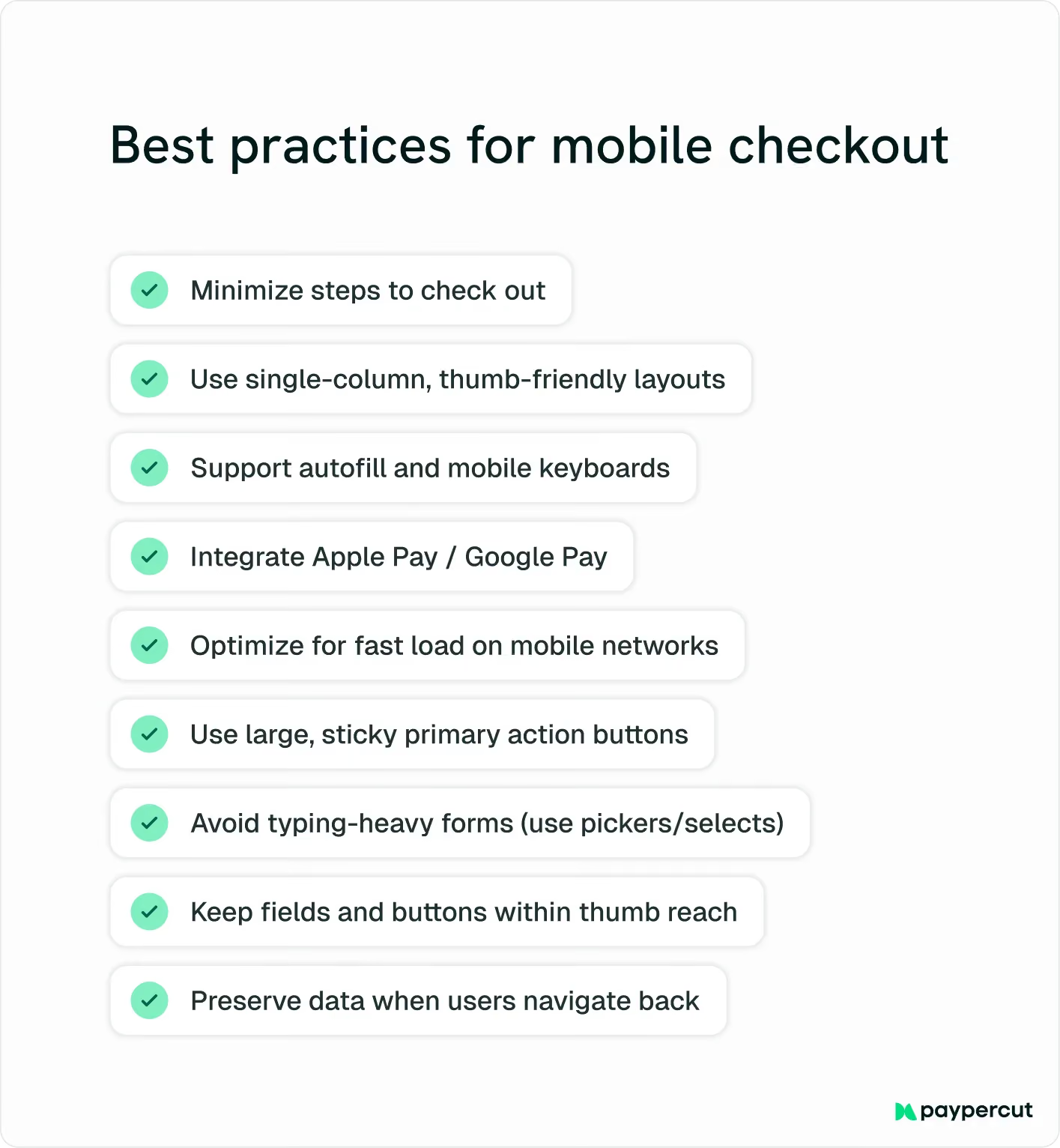
You can combat this issue by optimizing your checkout page in mobile, which includes:
- Reducing the number of form fields and enabling autofill
- Using large, easy-to-tap buttons and mobile-friendly keyboards
- Keeping checkout to one page or as few steps as possible
- Improving load speed so pages and payments respond instantly
Optimizing checkout for mobile users also means offering payment methods that reduce the need for manual input and are easy to use on smaller screens, such as digital wallets.
With Paypercut’s Express Checkout, you can bring many of these best practices together.
Apple Pay and Google Pay buttons will appear directly on your product page—no form, no redirect, and nothing to type.
For mobile shoppers in particular, it removes every step that typically causes drop-off.
8. Use clear call-to-action buttons
Never underestimate the power of well-placed and visually appealing call-to-action buttons.
With clear, action-focused labels like “Review your order,” “Go to payment,” or “Complete purchase,” you can make the next step obvious and easy to follow, reducing hesitation and increasing the chances of a successful checkout.
9. Retarget abandoned checkouts
Not every abandoned checkout is a lost sale. Many customers just need a reminder—or a small push—to come back and complete their purchase.
Retargeting helps you re-engage these shoppers and recover revenue that would otherwise be lost.
You can do this by:
- Sending abandoned checkout emails with a direct link back to their cart
- Offering a limited discount or incentive to complete the purchase
- Using retargeting ads to remind customers of the items they left behind
10. Reinforce purchase intent with remarketing
Customers often need more than one visit before they’re ready to buy.
So, staying visible after they leave can help bring them back once they’re closer to making a decision.
You can achieve this visibility by paying for search ads or social ads to remind customers of products they viewed, as well as reinforcing trust through consistent messaging.
Working with influencers can also be a useful strategy to build credibility with these customers, especially for industries with high abandonment rates, such as beauty and personal care (roughly 85%).
How Paypercut can help increase checkout conversion
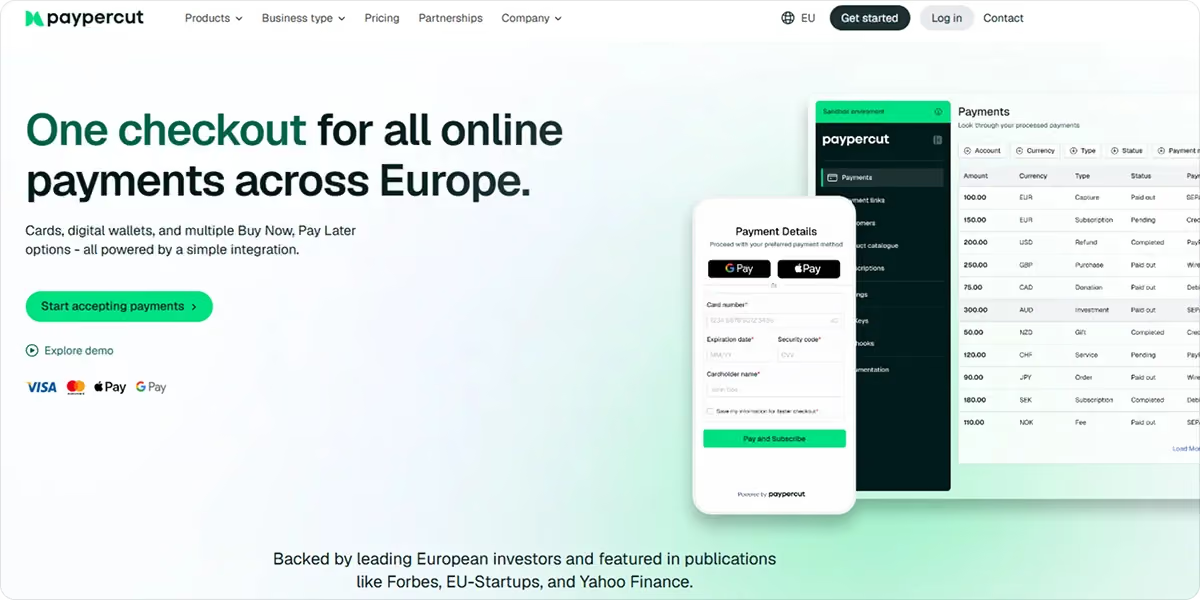
Besides giving you access to multiple payment methods through a single integration, Paypercut helps you address two key concerns that directly impact conversion: security and simplicity.
When it comes to security, Paypercut handles the complexity behind the scenes, so your checkout meets high security and compliance standards without extra work on your side.
This includes:
- PCI-DSS compliant infrastructure for secure card processing
- End-to-end encryption to protect sensitive data
- PSD2-compliant authentication to reduce fraud
- EU-regulated payment processing
These help you build trust at the moment that matters most: when customers are about to pay.
As for the checkout itself, Paypercut offers flexible ways to accept online payments, so you can choose what fits your business and your customers best.
Checkout options include:
- Hosted checkout – a ready-made payment page you can brand and launch quickly
- Embedded checkout – a checkout form integrated directly into your website
- Express Checkout – Apple Pay and Google Pay buttons on your product page, allowing one-tap payments
- E-commerce plugins – ready-to-use integrations for platforms like Shopify or WooCommerce
- Payment links – a secure link you can share via email, chat, or invoice
- QR code payments – a scannable code customers can use to pay instantly
All options support cards, digital wallets, and BNPL, so customers can still pay the way they prefer.
By combining trusted security with flexible checkout and payment options, Paypercut helps you remove the most common barriers at the final step and turn more checkouts into completed purchases.
Get started with Paypercut today and take the first step toward higher checkout conversion, or book a 30-minute call with our team for tailored guidance.
FAQ
How to increase checkout conversion rate?
To increase checkout conversion rate, make checkout fast and easy to complete, offer preferred payment methods, optimize for mobile, and remove anything that slows customers down or makes them hesitate.
What is a good checkout conversion rate?
A good checkout conversion rate is above 40%. However, most businesses fall in a lower range.