
QR code payments come with a range of benefits for merchants, and these are a big part of why more businesses across Europe are starting to use this form of payment.
The QR payments market in Europe was worth €2.69 billion in 2024 and is expected to grow to €13.09 billion by 2033, showing just how quickly adoption is picking up.
If you’re still wondering whether to adopt this payment method, this guide walks you through the top eight benefits of QR code payments that explain why they’re gaining so much traction.
Key takeaways
- QR code payments are simple to set up and use
You can start accepting payments in minutes by generating and displaying a code. Customers just scan and pay on their phone, with no complex setup on your side. - They make checkout faster and reduce lost sales
A quick scan-and-pay flow removes friction at checkout, helping more customers complete their purchase and making it easier to serve more people during busy periods. - They help you cut costs and simplify operations
You avoid hardware expenses and reduce ongoing overhead, while managing payments through a simpler, more streamlined setup. - They give you better visibility into your business
Every transaction is tracked digitally, so you can see sales trends, peak times, and customer behavior without manual work. - The right provider makes all the difference
To get the full benefit, you need a solution that is easy to use, flexible, and reliable. With Paypercut, you can create QR codes in seconds, accept payments across channels, and manage everything in one place without added complexity.
How do QR code payments work?
QR code payments are a simple way to accept digital payments using a smartphone.
When a customer scans a QR code, they’re taken to a secure payment page or app where they can complete the transaction.
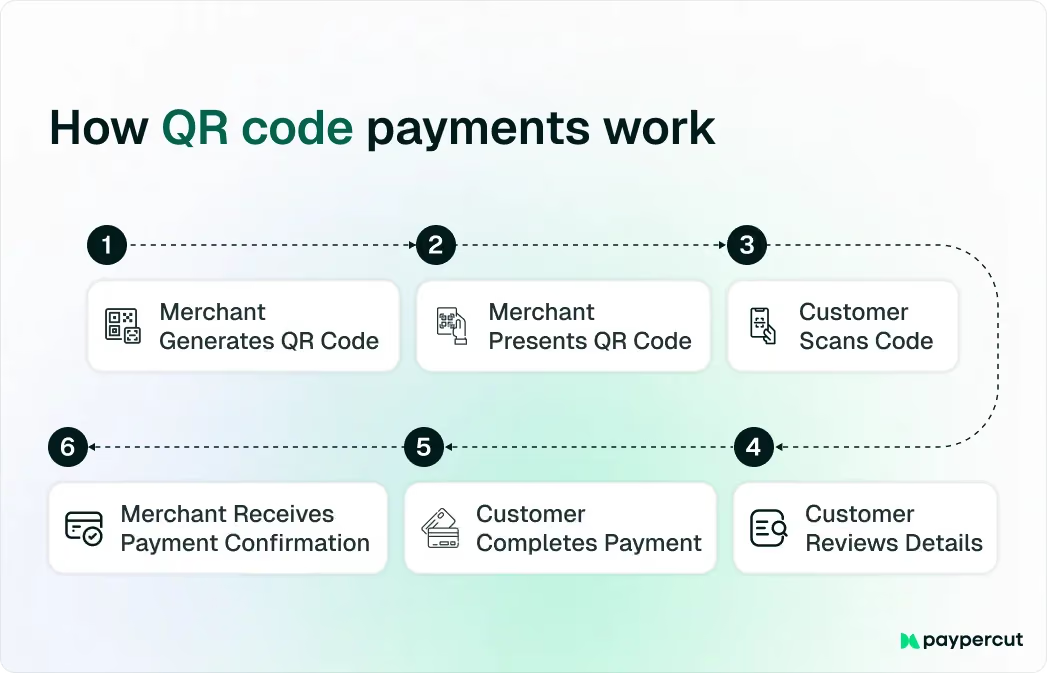
Here’s what the process looks like step by step:
- Generating the QR code: You create a QR code through your payment provider, either as a reusable static code or a dynamic one with a set amount.
- Sharing the QR code with the customer: You present the QR code at checkout—on a counter, screen, receipt, or online—so the customer can easily access it.
- Scanning the code: The customer uses their smartphone camera or a payment app to scan the QR code, which opens a payment page or app.
- Reviewing the payment: The customer checks the payment details, such as the amount and your business name, and enters the amount if it hasn’t been pre-set.
- Completing the payment: The customer confirms the payment using their preferred method, such as a card, digital wallet, payment app, or direct bank transfer via open banking.
- Receiving confirmation: You receive a payment confirmation through your system within seconds, while the funds are processed by your payment provider.
What are the benefits of QR code payments?
QR code payments make it easier for merchants to accept payments without relying on cash, cards, or extra hardware.
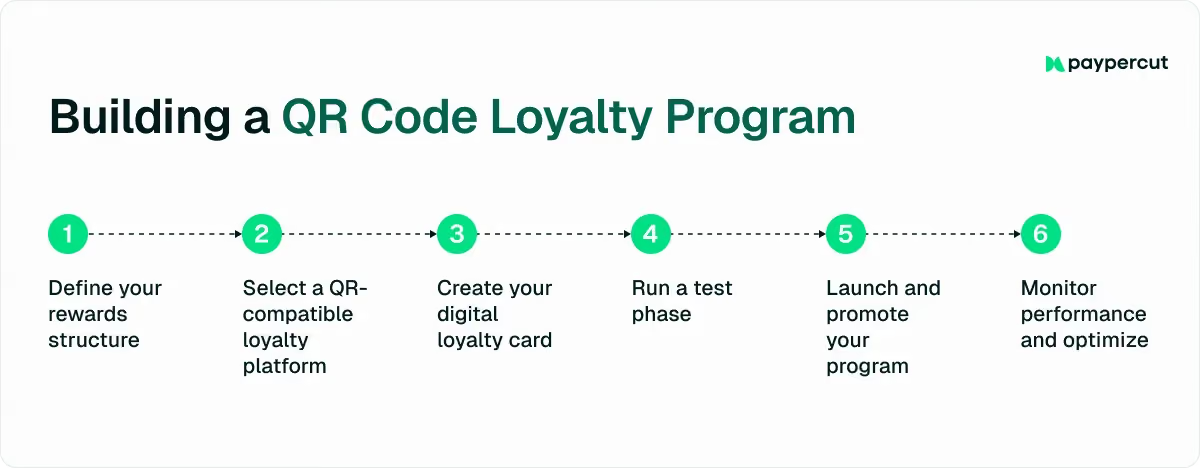
Here are eight practical benefits that QR code payments bring to the table.
1. Start accepting payments without extra hardware
To get started with QR code payments, you don’t need card terminals or any additional payment hardware.
Instead, you can generate a QR code through your payment provider and simply print it or display it to your customers.
They’re also quick to create and easy to share, which makes them an excellent choice for businesses looking for a simple, low-cost way to start accepting digital payments.
2. Use a payment method customers already understand
QR code payments may be relatively new, but the technology behind them isn’t.
Customers already use QR codes to view menus, access information, or interact with products, which makes paying with them feel familiar and easy to adopt.
It also helps that QR payments work on most devices and don’t require any specific apps, making them accessible to a wide range of customers.
3. Make it easier for customers to pay
QR code payments remove friction from the checkout process.
Instead of searching for cash or cards, customers can simply scan a code and complete the payment on their phone in just a few taps.
This bodes well for the merchants, as the European mobile payments market is expected to grow at a remarkable 37.38% CAGR in the coming years, reaching €545.92 billion by 2034.
In practice, this more convenient shopping experience will help merchants reduce drop-offs at checkout and even lead to higher basket sizes. Speeding up the checkout process also reduces the time spent per customer, which helps you serve more customers, especially during peak hours.
4. Build stronger customer loyalty
A smooth and simple checkout experience can make a big difference in whether customers come back. In fact, 50% of shoppers consider ease of checkout when deciding where to shop.
Other ways in which QR code payments build customer loyalty include:
- Meeting customer payment preferences: Offering QR payments gives customers another easy way to pay, reducing the risk of losing a sale because their preferred method isn’t available.
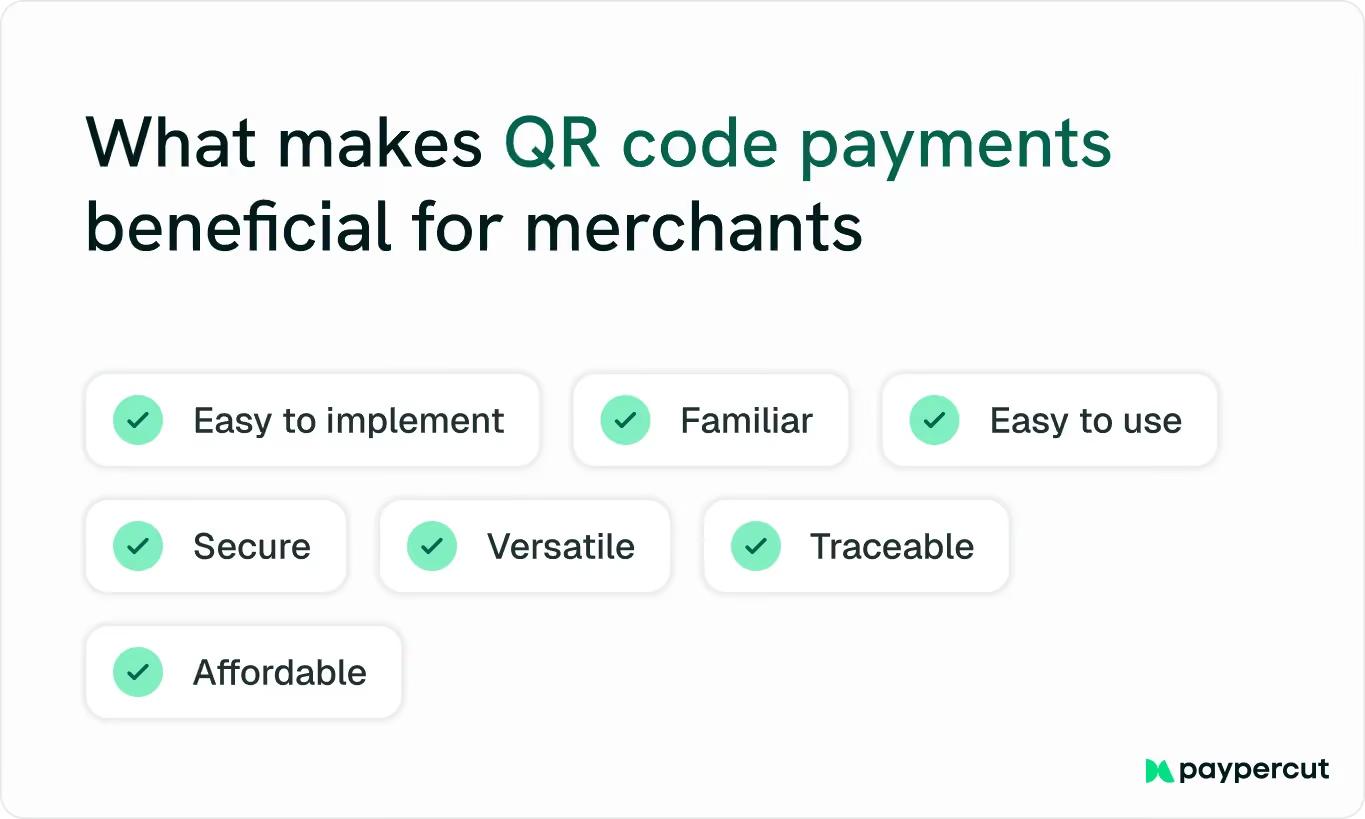
- Connecting payments with loyalty programs: QR codes can be used to link payments with loyalty programs, making it easier to track purchases, reward customers, or offer digital punch cards.
- Encouraging ongoing engagement: After a payment, you can prompt customers to join your loyalty program or interact with your brand, helping you build longer-term relationships.
5. Accept payments more securely
QR code payments are designed with security in mind.
Here’s what makes them a safe choice both for you and your customers:
- No card details are shared: Customers don’t need to enter or hand over card information at checkout, which lowers the risk of data exposure.
- Built-in security features: Payments are protected with encryption and strong customer authentication (SCA), including biometrics, PINs, and passwords.
- Lower fraud and chargeback risk: Since transactions are authorized directly by the customer in their own banking or payment app, there’s less chance of unauthorized payments.
- Contactless experience: Customers can pay using their own device without touching shared surfaces, which can make them feel more comfortable and confident completing the purchase.
6. Take payments wherever your customers are
QR code payments give you the flexibility to accept payments in more places and situations, not just at a traditional checkout.
You can use them across different channels without changing your setup, making it easier to turn customer interest into actual sales:
QR code payments also work well in low-connectivity environments, making them a reliable option even in settings where more complex payment setups might struggle.
7. Get better insights into your sales
QR code payments create a clear digital record for every transaction, giving you better visibility into how your business is performing.
Instead of relying on manual tracking or disconnected systems, you can access real-time data and insights through your payment provider. This data includes:
- Transaction volumes and values: See how much you’re selling and how often.
- Peak business hours: Identify when your business is busiest.
- Customer payment preferences: Understand how customers choose to pay.
- Daily, weekly, and monthly trends: Spot patterns and track performance over time.
- Refunds and cancellations: Keep track of issues and returns.
This kind of visibility makes it easier to manage your business, reduce errors, and make more informed decisions without extra admin work.
8. Keep your payment costs low
QR code payments can help reduce the ongoing cost of accepting payments, especially compared to more traditional setups, thanks to:
- Fewer cost layers: You avoid additional expenses like terminal rentals, servicing, or infrastructure management.
- Predictable pricing: You pay a clear fee per transaction, making it easier to track and manage your costs.
- Less operational overhead: With fewer systems involved, you spend less time and money on maintenance, support, and reconciliation.
For many merchants, this means a more cost-efficient and easier-to-manage payment setup over time.
Best practices for using QR code payments
QR code payments can deliver even better results when you use them effectively in your day-to-day operations.
Here are some best practices to help you get the most out of them:
- Display QR codes where customers expect to pay: Place them at eye level on counters, tables, screens, or printed materials so they’re easy to spot at checkout.
- Add a straightforward call to action: Tell customers exactly what to do with simple prompts like “Scan to pay” or “Scan to checkout” to avoid confusion.
- Make the payment flow direct: Link your QR code straight to the payment page or product, so customers don’t have to click through multiple steps.
- Ensure a mobile-friendly experience: Make sure the page or app customers land on works smoothly on mobile devices, since most scans happen on phones.
- Communicate accepted payment methods clearly: Show which apps or payment options are supported to help customers feel confident before scanning.
- Train your staff to assist customers: Make sure your team can quickly guide customers through scanning and completing a payment if needed.
- Use dynamic QR codes where possible: Choose codes that let you update amounts or links without reprinting, giving you more flexibility over time.
Unlock the benefits of QR code payments with Paypercut
QR code payments are easy to set up, but the provider you choose will shape how well they actually work for your business.
As part of its all-in-one payment solution, Paypercut offers payment links and QR codes, which give you a flexible, secure, and easy-to-manage way to accept payments.
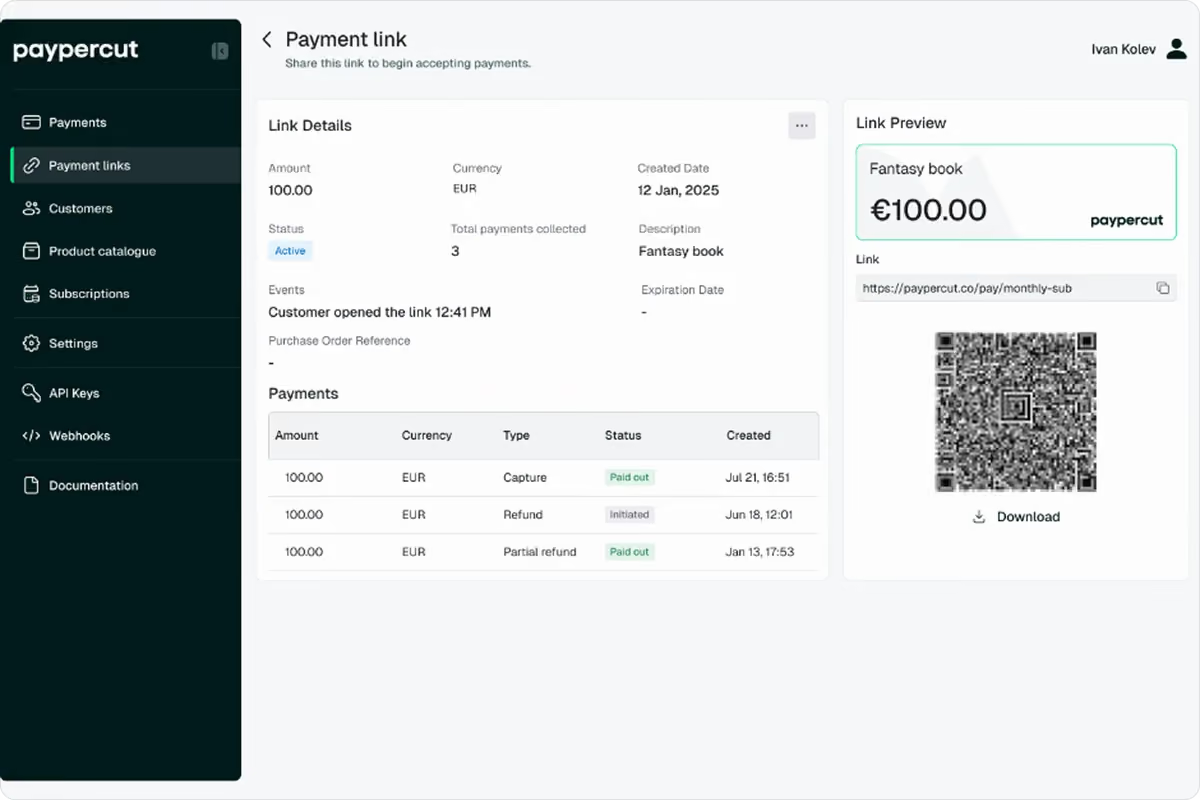
Paypercut’s QR codes allow you to:
- Start accepting payments instantly: Create a payment link or QR code in seconds and begin taking payments right away, without building a website or setting up a checkout page.
- Keep payments simple for you and your customers: Customers can scan and pay in just a few taps using cards or digital wallets, with a smooth and familiar experience.
- Accept payments across all your channels: Use QR codes in-store, on invoices, via email or chat, on social media, or on printed materials without changing your setup.
- Rely on secure payment processing: Payments are handled through a licensed, EU-regulated payment provider, with end-to-end encryption and SCA, so you don’t need to manage sensitive data or worry about compliance.
- Track everything in one place: Every payment is visible in your dashboard, with clear information on status, amount, and settlement.
- Get paid to your existing bank account: Funds are settled directly to the account you already use, with no need for additional infrastructure.
- Adapt to how your business works: Use reusable or one-time QR codes, set fixed amounts, or automate payment creation through your own systems.
- Work with a solution built for European markets: Local currencies, BNPL providers, and authentication rules are handled automatically, so you don’t need to manage regional requirements yourself.
These features make Paypercut’s QR code payments a good fit for everyday use cases like retail counters, restaurants, salons, and events, where you need a quick and simple way to accept payments.
It’s also valuable for more complex setups, such as order-based businesses, subscription services, or platforms that want to automate payments.
With options to generate payment links or QR codes directly from your systems, you can reduce manual work and keep your payment flow efficient as you scale.
If the benefits of QR code payments and Paypercut sound like a good fit for your business, you can get started right away by registering online and completing the onboarding fully digitally.
If you’d prefer to learn more first, you can also schedule a 30-minute consultation with the Paypercut team to see what the setup would look like in practice.
FAQ
What are the advantages of QR code payments?
The advantages of QR code payments are easier setup without extra hardware, faster and simpler checkout for customers, lower costs, and the flexibility to accept payments across multiple channels, from in-store to online.
What are the disadvantages of QR code payments?
The disadvantages of QR code payments are that they depend on smartphones and internet access, and may not work if a customer’s device is unavailable or offline. They can also exclude customers who prefer to pay with cash.
How much money can I pay through a QR code?
The amount you can pay through a QR code depends on the provider and payment method used, but in most cases, QR code payments support both small everyday purchases and higher-value transactions.
Is QR payment better than credit cards?
QR payments can be better than credit cards in some cases, as they are more flexible, don’t require hardware, and can reduce certain costs. However, credit cards are still widely used, so many businesses offer both options through a payment system.
Which countries use QR code payments the most?
QR code payments are most widely used in Asia, where they dominate mobile payments in countries like China. In Europe, adoption is growing quickly, but it’s still catching up as more businesses and customers start using them.