
Romania has a unique payment landscape shaped by its position at the crossroads of Central, Eastern, and Southeastern Europe, fast-changing consumer habits, and growing alignment with European Union regulations.
Over the past years, the market has evolved quickly, but it still keeps some very local characteristics, which is why cash is still deeply rooted in everyday transactions across the country.
At the same time, digital adoption among small and medium-sized enterprises (SMEs) remains below the European average. Only 27% of Romanian SMEs have reached at least a basic level of digital intensity, compared to an EU average of 57.7%.
For you as a merchant, this creates a real opportunity.
In a market where digital competition is still catching up, offering convenient electronic payment options can help you stand out, build trust, and serve customers who increasingly expect to pay by card or online.
With this in mind, let’s break down the best ways you can accept payments in Romania and how to strike the right balance between cash tradition and growing digital expectations.
Key takeaways
- Romania is digitalizing fast, but cash still matters
Card transactions are growing at double-digit rates, and online shopping is booming, yet cash remains widely used, especially in rural areas and through Cash on Delivery. - Cards and contactless payments are essential
With 26 million active cards in circulation and contactless now the norm in cities, accepting Visa and Mastercard, ideally with tap support, is a basic requirement for most businesses. - Mobile wallets and BNPL are shaping customer expectations
Apple Pay, Google Pay, and local wallet solutions are widely supported, and BNPL is expanding quickly for higher-value purchases. Offering flexible payment options can increase conversion rates and average order value. - Compliance and security aren’t optional.
Romania follows EU rules like PSD2, GDPR, AML, and SEPA. Strong Customer Authentication and fraud prevention tools are critical to reduce chargebacks, avoid penalties, and protect customer trust. - The easiest way to get it right is to use a payment aggregator built for the region
Instead of managing multiple providers, contracts, and integrations, you can use a platform like Paypercut to access cards, wallets, BNPL, recurring payments, and localized checkout flows in one setup. With built-in compliance, strong security standards, and no lock-in contracts, it helps you enter and grow in Romania without unnecessary complexity.
Understanding the payments market in Romania: 5 key facts
These five facts can help you understand just how dynamic and nuanced the Romanian payments market is, allowing you to properly tailor your payment setup to local expectations and business realities.
1. Romania uses the Romanian leu, not the euro
Although Romania is part of the EU, the euro isn’t its official currency. Payments are made in Romanian leu (RON).
For you, this means planning for currency conversion if you sell cross-border.
2. International payments in Romania are aligned with EU standards
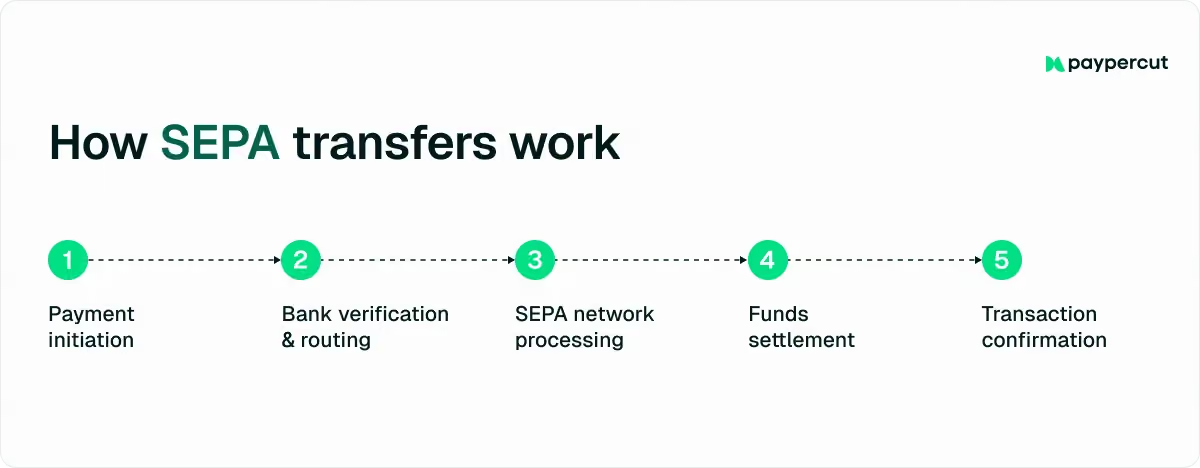
Romania is part of SEPA (Single Euro Payments Area), which means euro transfers between Romania and other EU countries follow the same standardized rules.
This makes cross-border payments simpler and more predictable, despite Romania not being part of the eurozone.
3. The Romanian regulatory environment is strongly shaped by EU rules
Since Romania joined the EU in 2007, its financial and payment systems have been shaped by EU directives such as PSD2 (the revised Payment Services Directive), which sets common rules for electronic payments, increases security, and opens the market to more competition.
At the national level, the National Bank of Romania (NBR) oversees payment systems and supervises financial institutions. It sets guidelines on how electronic payments are processed and works to keep the financial system stable.
This combination means that merchants can expect clear rules, strong oversight, and a payment environment that follows the same framework as the rest of the EU.
4. Romania is shifting from cash to digital payments
Romania has long been a cash-heavy market, but the move toward electronic payments is accelerating, as shown by the numbers:
- The total value of card transactions reached €53.32 billion in 2023 and is expected to grow by more than 12% per year in the coming years.
- The share of people shopping online has increased significantly in recent years, with Romania recording one of the largest jumps in the EU (+22 percentage points).
- The number of POS terminals has grown rapidly to keep up with demand, reaching 568,012 devices across a market with around 521,000 SMEs.
In addition, contactless payments now account for the majority of in-store card transactions, especially in urban areas.
There are a few major drivers behind this shift:
- Regulation: Since June 2024, businesses are required by law to offer at least one non-cash payment method.
- Technology: Contactless payments and mobile POS solutions (like tap-to-phone) make card acceptance faster and more affordable.
- e-commerce growth: Romania’s online market is expected to grow from €7.34 billion in 2026 to €10.41 billion in 2031, increasing demand for digital payment options.
- Digital banks and fintechs: New players are accelerating card adoption and bringing more people into the banking system.
- Improving infrastructure: Expanding POS networks and better internet access make electronic payments easier across the country.
For you, this means the direction is clear: digital payments are no longer a niche. They are becoming a standard expectation.
5. The digital shift isn’t happening evenly
There’s no denying it: Romania is moving toward digital payments. But the transition is still gradual, and it’s not as widespread as some merchants might expect.
Several factors are slowing things down:
- Only around 30.97% of the population used online banking as of late 2025, meaning a large share still relies on traditional methods.
- Financial inclusion stands at 71%, which leaves nearly a third of adults outside the formal financial system.
- Many people are still paid in cash or prefer to manage their money in cash.
- There is a clear urban–rural divide, with digital infrastructure and internet access stronger in cities than in rural areas, where roughly 45% of Romanians live.
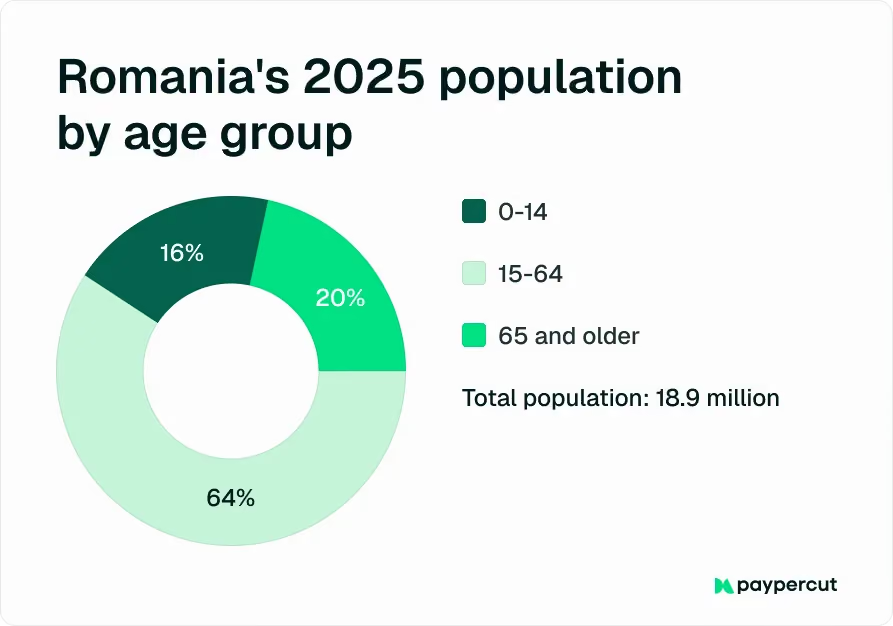
- 20% of the population is aged 65 and above, and older consumers are generally slower to adopt digital banking and online payments.
The lesson here is that you shouldn’t think in extremes. Romania is neither fully cash-based nor fully digital.
How to accept payments in Romania: 5 popular payment methods
The specific dynamics of the Romanian payments market are clearly reflected in the five most popular payment methods.
1. Cash
Cash is gradually losing share in the country, with the percentage of Romanians who reported paying in cash dropping from 45% to 21% after the COVID-19 pandemic began.
But even with this drop, cash is one of the most widely used payment methods in Romania. In fact, it had the highest share of payment transaction volume in 2023.
Another factor keeping cash relevant in Romania is Cash on Delivery (COD), which remains one of the most popular e-commerce payment methods, especially for cautious first-time buyers, rural customers, and older shoppers.
Many couriers, including companies like Fan Courier, Sameday, and DPD, support COD and handle both delivery and cash collection. The same goes for major online retailers, such as eMAG and Altex, which also offer COD to meet customer expectations.
2. Cards
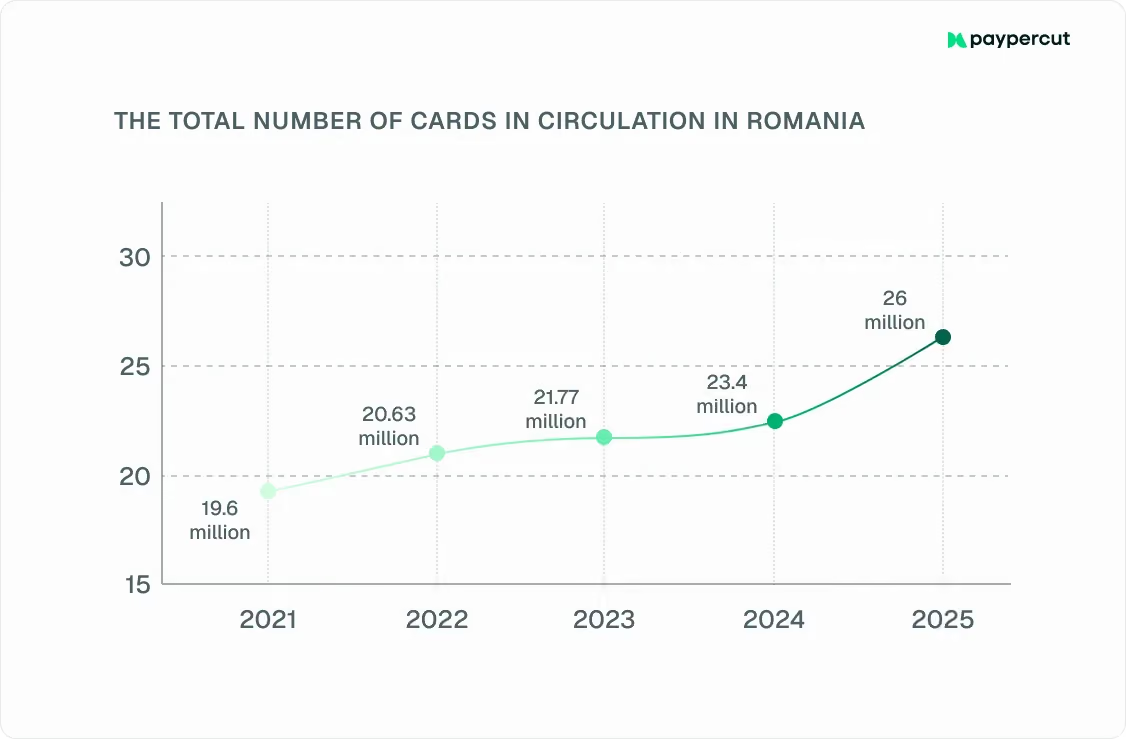
In the first half of 2025, there were 26 million active cards in circulation in Romania, a country of roughly 19 million people. That’s well over one card per adult, showing just how widespread card ownership has become.
However, not all cards are used in the same way.
- Debit cards dominate the market. Most Romanians prefer paying with the money they already have in their account. Debit card penetration is above one card per person.
- Credit cards remain limited, with only about 0.18 cards per capita. Consumers tend to avoid debt, which keeps credit card usage lower than in many Western European countries.
In terms of networks, there’s no local Romanian card scheme. The market is dominated by international brands, mainly Visa and Mastercard.
3. Mobile payments
While cards still dominate digital payments, mobile transactions are becoming a bigger part of everyday transactions in Romania, exceeding $23 billion in 2025.
Adoption has been steadily increasing, driven by:
- High Internet penetration of 17.7 million internet users
- Mobile connections that exceed the total population
- Better banking apps
- Changing consumer habits
In terms of specific payment methods used, contactless cards and digital wallets are leading the way.
Before the pandemic, about 50% of Romanians reported using contactless cards. Within a short period, that figure increased to 59%, and contactless has continued gaining ground since then.
As for digital wallets, they’re supported by major Romanian banks.
Common mobile and digital payment options include:
- Apple Pay
- Google Pay
- Samsung Pay
- eMAG My Wallet (a local wallet integrated into Romania’s largest e-commerce platform)
- mobilPay Wallet (a local payment solution developed by NETOPIA Payments and used by many online merchants)
Generally speaking, mobile payments are mostly used in:
- Urban retail stores, especially for contactless in-store payments
- e-commerce checkouts, where Apple Pay and Google Pay simplify online purchases
- Hospitality and services, where fast tap-and-go payments improve customer experience
4. Bank transfers
Bank transfers are a standard payment method in Romania, especially for paying bills, sending money between individuals (P2P), and handling larger purchases.
Adoption is growing, but it’s still not universal, with bank account penetration standing at 76% in 2024.
However, this number is expected to grow, driven by a few key factors:
- Strong mobile banking apps: Major banks actively promote mobile banking to younger, tech-savvy users.
- Instant payment systems: Services like RoPay and Alias Pay allow 24/7 instant transfers using just a phone number or QR code.
- Common B2B use: Bank transfers are frequently used for business payments and invoicing.
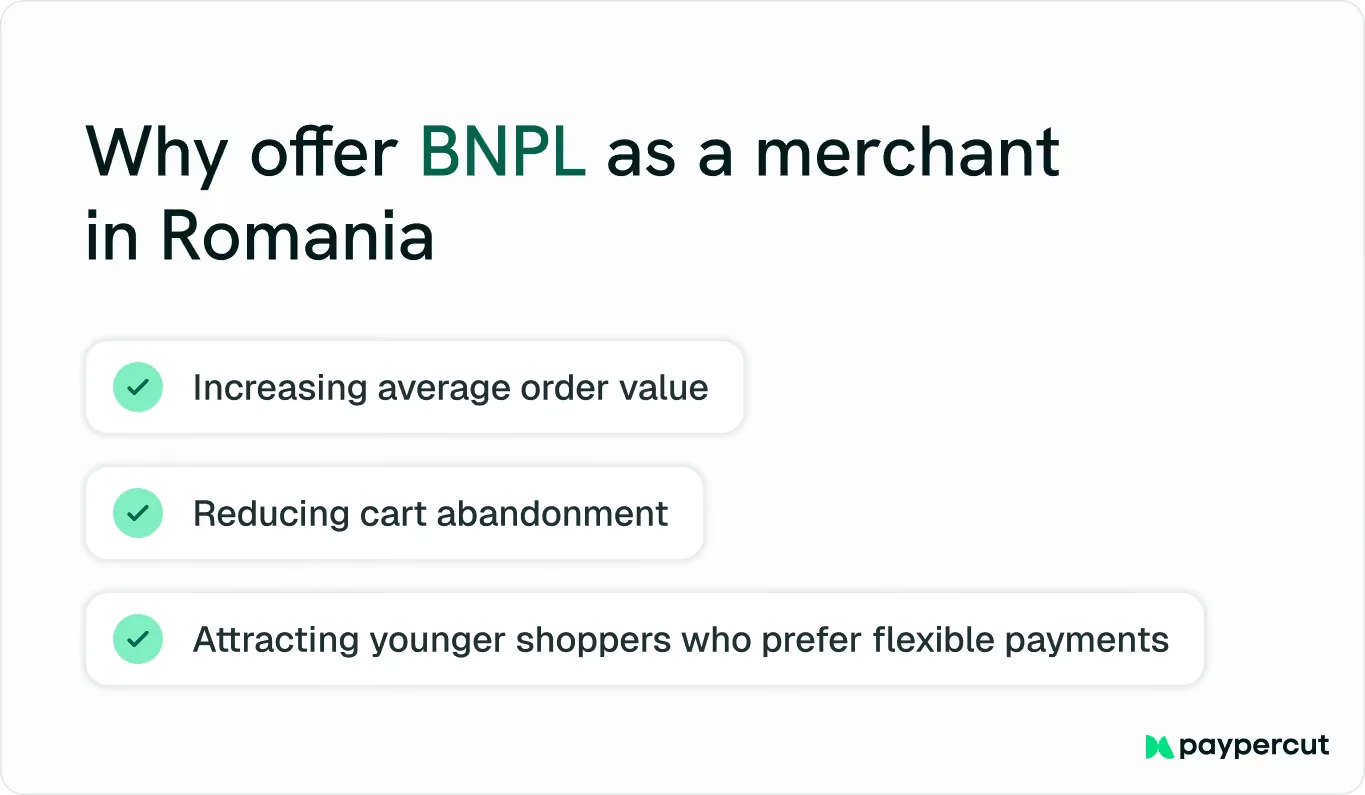
5. Buy Now Pay Later
BNPL (Buy Now, Pay Later) allows customers to split a purchase into several installments instead of paying the full amount upfront.
The flexibility and convenience of this payment method have led to a relatively quick expansion of the BNPL market in Romania. Key players include:
- Klarna
- Leanpay
- Mokka
- TBI Pay
- Beez
BNPL is particularly popular for higher-value purchases like electronics, furniture, fashion, and travel.
Best practices for accepting payments in Romania
Romania’s payments market is modernizing quickly, but that doesn’t mean it’s without challenges. From regulation to customer habits, there are a few things you need to get right to operate smoothly.
1. Make payments feel familiar
Even though many Romanians are among the strongest English speakers in the world, not all customers feel comfortable completing a purchase in English.
That’s why you should consider offering your checkout and payment interface in Romanian, making the experience feel more familiar and trustworthy.
Beyond translation, you can localize the checkout experience by:
- Displaying prices clearly in RON
- Showing payment methods that customers recognize
- Using simple language at checkout
Small adjustments like these can improve trust, reduce friction, and increase conversions.
2. Stay aligned with local and EU regulations
Romania follows both national and EU-level rules to keep payments secure and transparent. As digital transactions grow, compliance becomes part of doing business.
Here are the key regulations you should be aware of:
3. Take cybersecurity seriously
Payment systems are common targets for phishing, malware, and social engineering attacks, something Romania is well-familiar with.
In 2026, fraudsters even used a deepfake campaign involving Mugur Isărescu, the Governor of the National Bank of Romania, to promote fake investment platforms. The case shows how sophisticated scams have become in the country.
For you, this means security must be built into your payment setup. You can achieve this by:
- Using Strong Customer Authentication for online payments
- Working with providers that offer advanced fraud detection tools
- Keeping your systems updated and your team alert to phishing attempts
The smartest way to accept payments in Romania: Partner with a reputable payment aggregator
If you want to enter the Romanian market without juggling multiple providers, contracts, and integrations, the smartest move is partnering with a payment partner that gives you everything in one setup: local methods, compliance, security, and cross-border flexibility.
That’s exactly where Paypercut comes in.
Paypercut is a European payment platform built for small and mid-sized businesses that want to accept online payments simply and expand across Europe without rebuilding their checkout in every country.
Here’s what you get when partnering with Paypercut:
- All key payment methods and tools in one place: Enable cards, digital wallets, BNPL, recurring payments, split payments, payment links, and QR codes, all under one integration.
- Built-in BNPL aggregator: Offer multiple BNPL providers without signing separate contracts (where possible).
- Localized payment experience: Present local currencies like RON, region-relevant payment methods, and market-specific checkout flows automatically.
- Secure payment infrastructure: Process payments through PCI-DSS compliant infrastructure with encryption and PSD2 Strong Customer Authentication support.
- Payment compliance support: Paypercut helps apply relevant payment rules, authentication requirements, and local payment standards through its platform.
- No lock-in contracts: Pay a simple transaction-based fee with no setup costs or mandatory long-term commitments.
- Flexible checkout options: Use hosted checkout, embedded checkout, plugins for major e-commerce platforms, or full API integration.
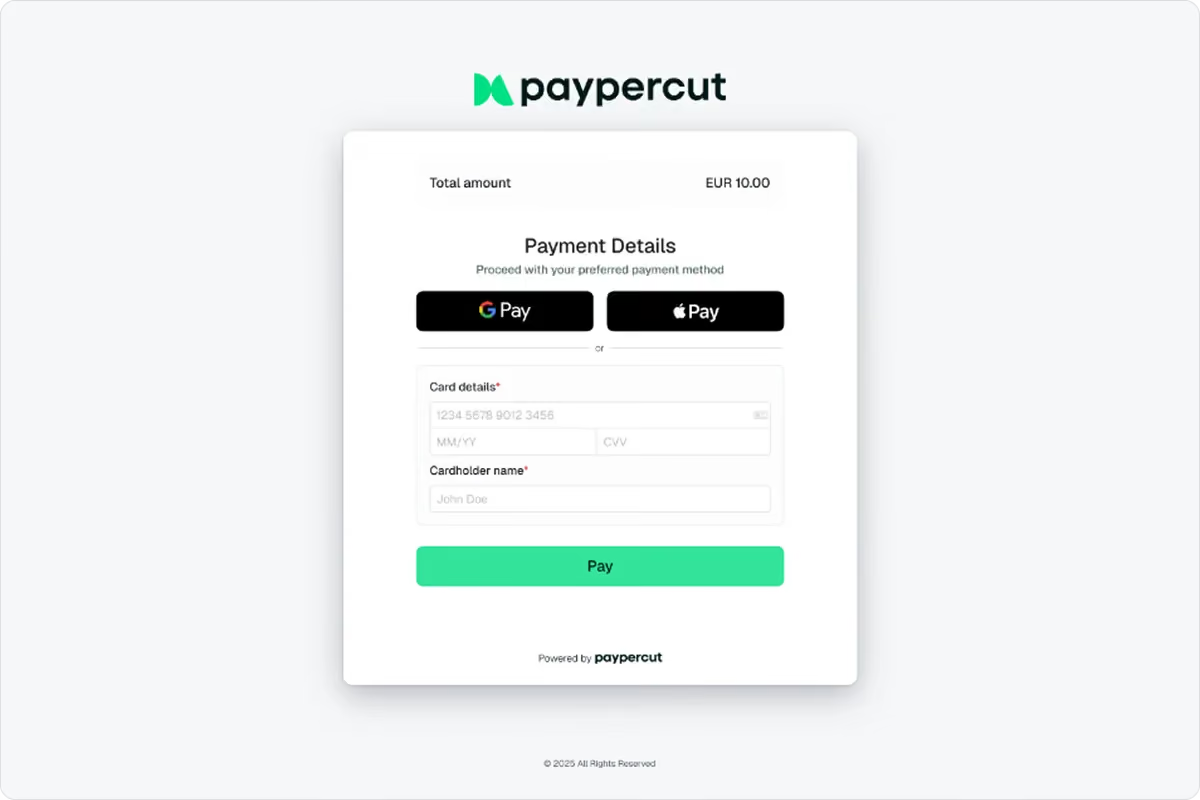
In a market like Romania, where localization, regulation, and customer trust matter, working with the right partner can save you months of setup and compliance work.
Ready to get started?
Register online in just a few minutes with fully digital onboarding or book a 30-minute consultation with the Paypercut team to find the setup that fits your business best.